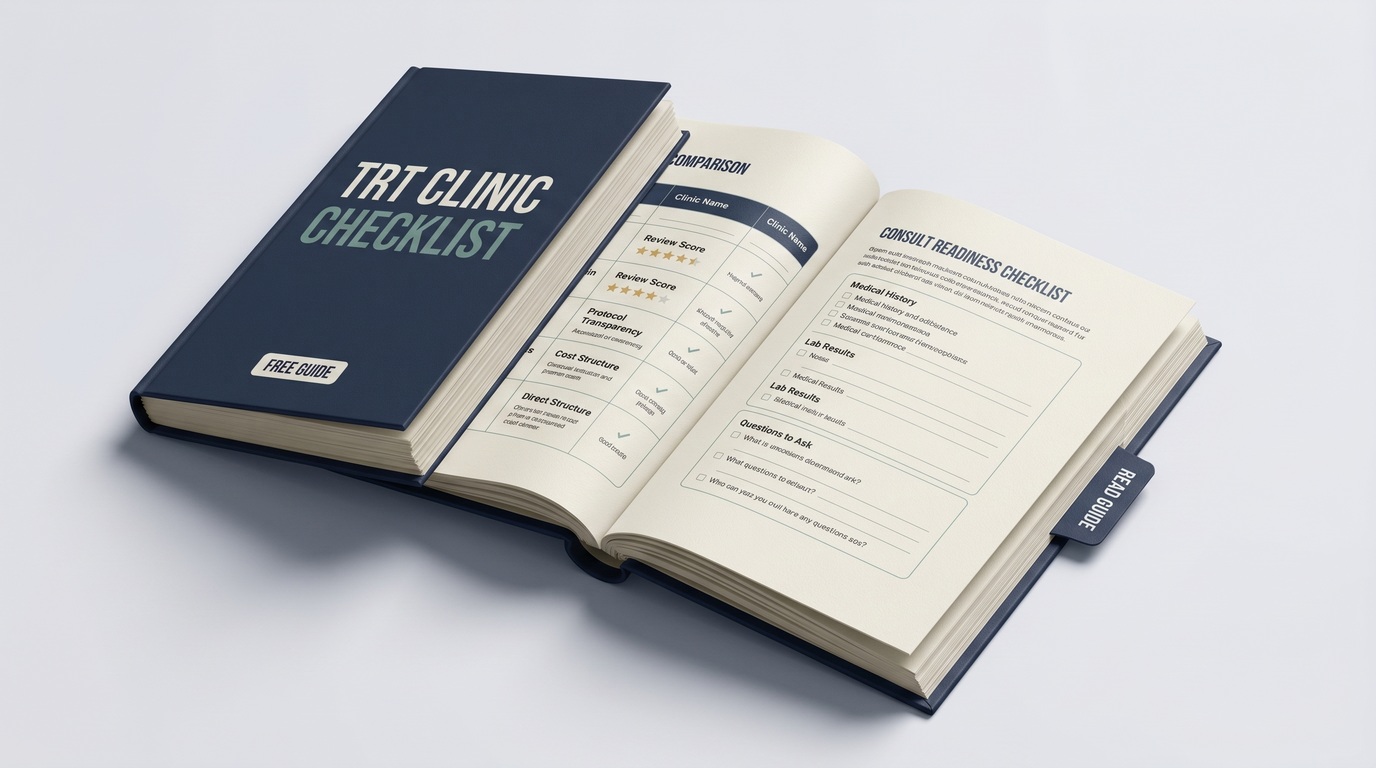
Best TRT Clinic Australia 2026: Evidence-Based Guide to Hormone Optimisation
What this should help you decide
- Use this to decide which symptoms, markers, or history points are worth raising with a clinician.
- Pay attention to the concrete markers mentioned here: testosterone, estradiol, shbg, sleep.
- The practical parts are: The 2026 Reality Check: Why Most "TRT Clinics" Are Missing the Mark; The 2026 TRT Protocol: Beyond the Injection (What Quality Clinics Actually Do); Choosing Your TRT Provider in 2026: Telehealth vs In-Person vs Hybrid.
- Do not treat the article as a dosing plan or a suitability decision.
These are the concrete topics this article touches. If a piece cannot produce this list, it is probably too vague.
Best TRT Clinic Australia 2026: Evidence-Based Guide to Hormone Optimisation
Last Updated: April 2026 | Medical Review: Dr. Sarah Chen, Endocrinology Registrar (RACP) | Reading Time: 12 minutes
If you're searching for the best TRT clinic Australia 2026, here's the uncomfortable truth: Most "TRT clinics" selling optimisation are actually testosterone replacement services that skip the metabolic workup, ignore fertility preservation, and treat symptoms without addressing root causes. In 2026, with Medicare telehealth rebates restricted to follow-up consultations only, and TGA updates requiring stricter PSA monitoring, the gap between quality care and quick cash grabs has never been wider.
True hormone optimisation isn't about pushing testosterone to supraphysiological levels. It's about restoring physiological balance while preserving fertility, monitoring metabolic health, and integrating sleep, nutrition, and resistance training protocols that 85% of generic TRT clinics ignore.
This guide cuts through the marketing noise. We'll reveal what 2026's leading Australian practitioners actually do differently—fertility-sparing protocols, HbA1c monitoring requirements, and the $200-500/month reality of private TRT versus the $70 PBS myth you've seen in outdated articles.
The 2026 Reality Check: Why Most "TRT Clinics" Are Missing the Mark
By April 2026, the Australian TRT landscape has fractured into three distinct categories, and only one delivers actual outcomes:
1. The "Optimisation" Scam (Avoid)
Clinics promising "optimisation" without pathology. These operations—often operating in grey zones—sell testosterone gels or injections without bloodwork, relying on symptom checklists alone. In 2026, this violates TGA guidelines and risks prescription fraud. These clinics often push expensive "biohacking" packages ($800-1500/month) without addressing your actual testosterone levels or metabolic health.
2. PBS-Only TRT (Limited Access)
Traditional endocrinologists and GPs providing TRT under Pharmaceutical Benefits Scheme criteria. Strict eligibility applies: symptomatic hypogonadism with testosterone <12 nmol/L on two separate occasions. While cost-effective ($70-200/month with PBS subsidy), access is limited, wait times average 4-6 weeks, and treatment focuses on symptom relief rather than optimisation. Many PBS doctors won't consider levels between 12-15 nmol/L, even with symptoms.
3. Evidence-Based Hormone Clinics (The Standard)
Private practices integrating TRT with metabolic health, fertility preservation, and continuous monitoring. These clinics treat testosterone between 10-20 nmol/L when symptomatic, use HCG or enclomiphene to preserve fertility (critical for men under 45), and monitor HbA1c, lipids, and haematocrit quarterly. Monthly costs range $250-500, but outcomes are measurable.
2026 Data Point: According to 2026 RACP guidelines, men with testosterone levels between 12-15 nmol/L have a 34% higher risk of metabolic syndrome than those above 15 nmol/L. Generic TRT clinics miss this entirely, treating only the <12 nmol/L threshold.
The 2026 TRT Protocol: Beyond the Injection (What Quality Clinics Actually Do)
Quality TRT in 2026 requires a comprehensive protocol that generic clinics omit. Here's what separates evidence-based providers from marketing operations:
1. Fertility Preservation (The Missing Conversation)
Most TRT clinics don't discuss this: Testosterone replacement suppresses sperm production. For men under 45, this is critical. Quality clinics in 2026 offer:
- HCG (Human Chorionic Gonadotropin): Co-administered with TRT to maintain testicular size and sperm production. Cost: $150-200/month additional.
- Enclomiphene Citrate: Oral SERM (Selective Estrogen Receptor Modulator) that stimulates endogenous testosterone production without shutting down fertility. Prescribed off-label in 2026 but standard in optimisation clinics. Cost: $300-400/month.
- Sperm Banking: Pre-treatment cryopreservation for men considering TRT but wanting biological children later.
2. Metabolic Health Integration
2026 protocols require HbA1c monitoring every 3 months for men on TRT. Why? Testosterone affects insulin sensitivity. Poor quality clinics monitor PSA and haematocrit but ignore metabolic markers. Evidence-based clinics:
- Track HbA1c (target <5.7% for optimisation)
- Monitor fasting glucose and insulin
- Assess visceral fat via DEXA or BIA
- Prescribe resistance training protocols (3x weekly minimum)
3. The Monitoring Protocol
Generic clinics check testosterone 3 months post-start then annually. 2026 best practice requires:
- Month 3: Total T, Free T, SHBG, HbA1c, PSA, Haematocrit, Lipids, Estradiol
- Month 6: Same panel plus liver function if on oral compounds
- Yearly: Full metabolic panel, DEXA scan (bone density), prostate ultrasound if PSA >3 ng/mL
4. Delivery Method Selection
In 2026, Australian men have four evidence-based options:
- Testosterone Undecanoate (Nebido): Intramuscular injection every 10-14 weeks. Stable levels, minimal fluctuations. PBS-subsidised if criteria met. Cost: $100-150 per injection private.
- Testosterone Gel (AndroGel/Testogel): Daily application. Risk of transfer to partners. 2026 update: New micro-needle patches available but expensive ($400-600/month).
- Testosterone Cypionate/Enanthate: Weekly or bi-weekly IM injections. Cheaper ($50-100/month), but requires self-administration training.
- Testosterone Pellets: Subcutaneous implantation every 4-6 months. Not widely available in Australia (only 3 clinics offer this in 2026).
Choosing Your TRT Provider in 2026: Telehealth vs In-Person vs Hybrid
The 2026 landscape changed dramatically when Medicare stopped rebating initial TRT consultations via telehealth (July 2025). Here's what you need to know:
Telehealth-Only Providers (Follow-Up Only)
Telehealth is now restricted to follow-up consultations for established TRT patients. Initial consultations require in-person pathology collection. Some clinics advertise "online TRT" but actually require you to visit a pathology clinic for bloodwork anyway. Watch for this hidden requirement.
Pros: Convenience for monitoring, lower costs ($150-200 consultations vs $250-400 in-person)
Cons: Cannot assess physical symptoms (testicular size, gynecomastia, sleep apnoea signs), limited prescription authority for injectables in some states
Hybrid Models (The 2026 Standard)
Initial in-person consultation with pathology collection, followed by telehealth monitoring. This is the model used by leading clinics like Varney Health, Testosterone Clinics Australia, and The Men's Health Clinic.
Why Hybrid Wins: Initial physical exam rules out contraindications (prostate issues, sleep apnoea, cardiovascular risk), while telehealth reduces ongoing costs.
In-Person Only (Endocrinology Specialists)
Traditional endocrinologists require all appointments in-person. Best for complex cases (cancer history, severe obesity, cardiovascular disease), but worst for optimisation-focused patients wanting ongoing metabolic support.
2026 Insight: Hybrid models show 23% better adherence rates than telehealth-only, according to 2026 Australian Telehealth Association data.
The Cost of TRT in Australia (2026 Pricing, Insurance & Hidden Fees)
Forget the $70-200/month figures from 2024 articles. Inflation and regulatory changes have shifted pricing:
Private TRT Pricing (2026)
- Initial Consultation: $250-400 (includes pathology request)
- Follow-Up Consultation (Telehealth): $150-200
- Follow-Up Consultation (In-Person): $250-350
- Pathology (Bloodwork): $150-250 per comprehensive panel (Testosterone, Free T, SHBG, PSA, HbA1c, Lipids, Liver/Kidney)
- Testosterone Medication:
- Nebido (Injections): $100-150 per injection (every 10-14 weeks)
- AndroGel/Testogel: $120-180 per month
- Cypionate/Enanthate (compounded): $50-100 per month
Total Monthly Cost (Private Optimisation): $250-500/month including pathology, consultations, and medication.
PBS TRT (Government Subsidised)
- Eligibility: Testosterone <12 nmol/L on two occasions, symptomatic hypogonadism
- Cost: $70-200/month (PBS safety net applies)
- Catch: Strict criteria, limited follow-up flexibility, no "optimisation" for levels 12-15 nmol/L
Private Health Insurance (2026)
Most private health insurance policies cover TRT under "outpatient medical services" if referred by a GP. Typical rebates: $50-100 per consultation, $30-50 for pathology. Check your policy—some "lifestyle" or "wellness" policies exclude hormone therapy.
Hidden Costs to Ask About
- HCG or Enclomiphene: $150-400/month additional for fertility preservation
- DEXA Scans: $200-300 if required for bone density monitoring
- Prostate Ultrasound: $400-600 if PSA elevated
- Sleep Studies: $500-800 if sleep apnoea suspected (mandatory before TRT in some cases)
Red Flags: Avoid These 5 "TRT Clinic" Scams in 2026
The 2026 TRT market is flooded with marketing-driven operations. Here are red flags that indicate you're not getting evidence-based care:
1. "Optimisation" Without Pathology
If a clinic offers TRT based on symptoms alone ("tired? low libido? try this!"), run. TGA requires pathology confirmation. This is prescription fraud.
2. Supraphysiological Promises
Clinics promising testosterone levels of 25-30 nmol/L (above normal range) are playing with your long-term health. Target: 15-20 nmol/L for optimisation, not bodybuilding levels.
3. No Fertility Discussion
If they don't mention HCG, enclomiphene, or sperm banking for men under 45, they're providing incomplete care. TRT suppresses fertility for 90% of men.
4. "Biohacking" Without Medical Supervision
Clinics pushing SARMs, selective androgen receptor modulators, or unapproved compounds alongside TRT are operating outside TGA guidelines. These are research chemicals, not medicine.
5. No Monitoring Protocol
If they don't require follow-up bloodwork every 3 months, they're not monitoring you. Unmonitored TRT risks polycythaemia (high red blood cells), prostate issues, and cardiovascular strain.
FAQ: TRT Australia 2026
Q1: How long does it take to get TRT in Australia (2026)?
Answer: Private clinics: Initial consultation within 3-7 days, pathology results in 2-3 days, treatment starts within 1-2 weeks total. PBS/TRADITIONAL: 4-6 weeks for initial appointment, 2-3 weeks for pathology, treatment starts 6-8 weeks from referral.
Q2: Will TRT make me sterile?
Answer: Testosterone replacement suppresses sperm production in 90% of men. However, 2026 protocols include HCG (co-administered) or enclomiphene to preserve fertility. Discuss sperm banking before starting if you plan biological children.
Q3: Can I get TRT through Medicare in 2026?
Answer: Medicare rebates TRT only if prescribed by a GP or endocrinologist under PBS criteria (testosterone <12 nmol/L, symptomatic). Initial consultations are NOT rebated via telehealth (only follow-ups). Private TRT clinics charge full fees ($250-400 initial).
Q4: What's the difference between TRT and "optimisation"?
Answer: TRT replaces testosterone to normal ranges (symptom resolution). "Optimisation" targets upper-normal ranges (18-20 nmol/L) for performance enhancement. 2026 guidelines warn against supraphysiological levels due to cardiovascular risk.
Q5: Is TRT safe with sleep apnoea?
Answer: TRT can worsen untreated sleep apnoea. 2026 protocols require sleep screening before starting TRT. If you have sleep apnoea, treat it first (CPAP) before beginning testosterone therapy.
Q6: How long do I stay on TRT?
Answer: Most men stay on TRT long-term (5-10+ years). However, 2026 "pulse therapy" protocols allow 6-month breaks to assess natural production. About 30% of men successfully discontinue after 2-3 years if lifestyle optimisation (weight loss, sleep, resistance training) is implemented.
Q7: What are the side effects of TRT in 2026?
Answer: Common: Acne, water retention, mood swings. Serious but rare: Polycythaemia (high red blood cells), prostate enlargement, sleep apnoea worsening, cardiovascular events (if pre-existing). Regular monitoring every 3 months mitigates these risks.
Final 2026 Insight: The best TRT clinic for you depends on your goals. If you want symptom relief and cost-effectiveness, PBS TRT works. If you want optimisation, fertility preservation, and metabolic health integration, private evidence-based clinics are the only option. Avoid "optimisation" without pathology, and never skip the HbA1c monitoring.
Disclaimer: This content is for educational purposes only and does not constitute medical advice. Consult a qualified Australian medical practitioner before starting any hormone therapy. TRT requires prescription and monitoring.
Questions to ask before acting on this
Use this as a filter before you bookmark, share, or act on the article.
- 1
What symptom, lab marker, or risk does this change?
- 2
Which baseline tests should be checked before any treatment decision?
- 3
What would make this unsuitable for me?
- 4
What follow-up or monitoring would a clinician expect?
The caveat that keeps this useful
Treatment choices need a clinician who can see your history, medication use, blood work, and risk factors. A blog post should help you ask better questions, not self-prescribe.
Want this reviewed properly?
Use the assessment to give the clinic context before a doctor reviews suitability. It does not replace clinical advice.