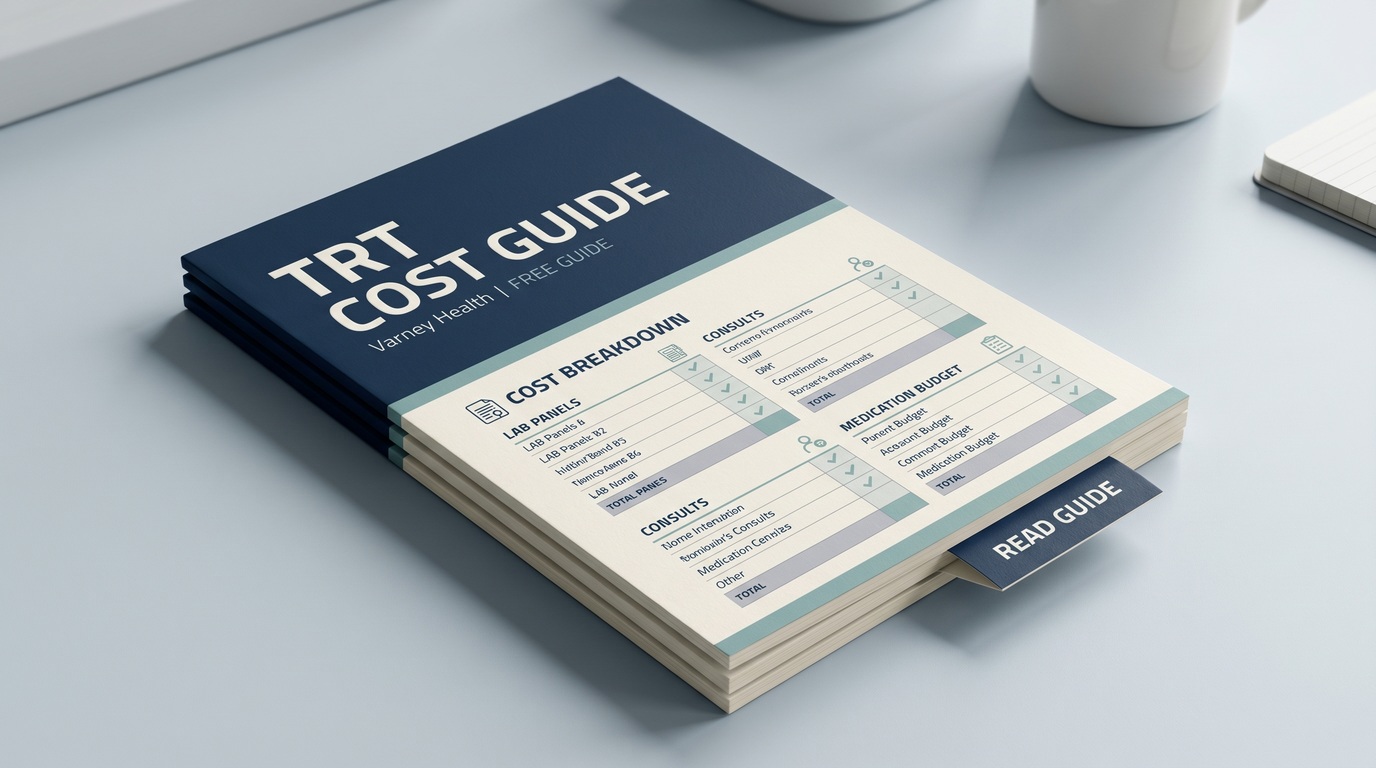
TRT Aus 2026: Complete Guide to Costs, Protocols & Fertility Preservation
What this should help you decide
- Use this to decide which symptoms, markers, or history points are worth raising with a clinician.
- Pay attention to the concrete markers mentioned here: testosterone, free testosterone, shbg, sleep.
- The practical parts are: TRT in Australia 2026: Legal Framework & PBS Updates; Complete Cost Breakdown for TRT in Australia (2026 Pricing); TRT Delivery Methods: Injections vs Gels vs Pellets - 2026 Comparison.
- Do not treat the article as a dosing plan or a suitability decision.
These are the concrete topics this article touches. If a piece cannot produce this list, it is probably too vague.
TRT Aus 2026: Complete Guide to Costs, Protocols & Fertility Preservation
Last Updated: April 2026
If you're considering TRT aus in 2026, you're likely overwhelmed by conflicting information. Some sources claim TRT is accessible through GPs for $30/month; others warn of $400+ monthly costs and permanent fertility loss. The reality is more nuanced, and the Australian landscape has shifted dramatically since 2024.
Here's the truth: TRT in Australia costs between $150-$500 per month in 2026, depending on your delivery method, whether you access PBS subsidies, and if you're combining therapy with fertility preservation protocols. More critically, standard TRT protocols suppress sperm production within 3-6 months—a fact glossed over by most Australian clinics but critical for men under 45 considering future fatherhood.
This guide provides the 2026-specific data, practitioner protocols, and Australian regulatory context you won't find on generic TRT landing pages.
TRT in Australia 2026: Legal Framework & PBS Updates
Understanding the regulatory landscape is essential before pursuing TRT. In Australia, testosterone is classified as a Schedule 4 (prescription-only) medicine, and the Therapeutic Goods Administration (TGA) has maintained strict prescribing guidelines through 2025-2026.
Current PBS Coverage (2026)
As of the 2026 PBS schedule, testosterone formulations are listed under specific clinical criteria:
- Testosterone Undecanoate (Nebido): PBS listed for hypogonadism with documented clinical symptoms and confirmed biochemical deficiency
- Testosterone Gel (Androgel, Testogel): PBS listed but with stricter criteria—typically requires documented failed injection therapy or contraindication to injections
- Testosterone Enanthate/Cypionate (injectable): Not PBS listed in 2026—these remain fully private prescriptions
Critical 2026 Update: The PBS listing for testosterone undecanoate (Nebido) remains restricted to men with documented hypogonadism who have undergone specialist assessment. General practitioners can prescribe, but Medicare rebates only apply if the patient meets specific clinical criteria including:
- Confirmed low testosterone (total T < 12 nmol/L or free T < 10 pmol/L)
- Clinical symptoms (fatigue, low libido, erectile dysfunction, depression, reduced muscle mass)
- Exclusion of secondary causes (sleep apnea, obesity, medication-induced)
Telehealth Regulations: Following the permanent telehealth reforms cemented in 2025, Australian men can now legally access TRT prescriptions via telehealth clinics like Varney Health, provided the clinic holds appropriate medical registration and follows TGA prescribing protocols.
Complete Cost Breakdown for TRT in Australia (2026 Pricing)
Competitors cite outdated 2024 figures ($70-$200/month). Here's the actual 2026 cost structure:
Initial Costs (One-Time)
| Service | GP (Medicare Rebate) | Specialist (Men's Health) | Telehealth Clinic |
|---|---|---|---|
| Initial Consultation | $0-$100 out-of-pocket | $150-$250 out-of-pocket | $99-$199 flat fee |
| Comprehensive Blood Panel | $80-$150 | $120-$200 | $150-$250 (home collection) |
| PSA Test (if applicable) | $30-$50 | $40-$60 | Included in panel |
2026 Blood Test Costs: Pathology costs have increased 8-12% since 2024 due to pathology network changes. A comprehensive TRT panel (Total T, Free T, SHBG, LH, FSH, Haematocrit, PSA, Liver Function, Lipid Profile) now costs $150-$250 without pathology bulk-billing.
Ongoing Monthly Costs (2026)
| Delivery Method | Medication Cost | Monitoring (Quarterly) | Total Monthly (Avg) |
|---|---|---|---|
| PBS Testosterone (Gel) | $30-$45 (co-payment) | $40-$50 | $70-$95 |
| Private Injectable (Enanthate/Cypionate) | $80-$150 | $40-$50 | $120-$200 |
| Nebido (PBS Injectables) | $30-$45 (co-payment) | $40-$50 | $70-$95 |
| Pellets (Subcutaneous) | $400-$600 (every 3-4 months) | $40-$50 | $130-$230/month |
Important: These figures exclude additional medications. If you're combining TRT with fertility preservation (HCG or Clomid), add $50-$120/month depending on protocol.
TRT Delivery Methods: Injections vs Gels vs Pellets - 2026 Comparison
This is where most Australian clinics fail to provide depth. Each method has distinct pharmacokinetic profiles, side effect risks, and cost implications.
Injectable Testosterone (Enanthate/Cypionate)
Mechanism: Intramuscular injection with 7-10 day half-life. Requires weekly or bi-weekly administration.
2026 Pros:
- Cost-effective: $80-$150/month for high-quality pharmaceutical grade
- Stable levels: When dosed correctly (150-200mg weekly), maintains steady-state testosterone
- Efficiency: 100% bioavailability (no transdermal loss)
2026 Cons:
- Injection burden: Requires self-administration or clinic visits
- Hematocrit elevation: Higher risk of polycythemia (hematocrit >54%) requiring dose adjustment or phlebotomy
- Pain/Injection site reactions: 15-20% report soreness
Best for: Men prioritizing cost-effectiveness, those with oily skin (gel contraindication), and patients comfortable with self-injection.
Transdermal Gels (Androgel, Testogel)
Mechanism: Daily application to shoulders/arms with 24-hour absorption window.
2026 Pros:
- Physiological release: Mimics natural diurnal variation
- Lower hematocrit risk: Less likely to elevate red blood cell count compared to injections
- PBS subsidized: $30-$45/month co-payment vs $80-$150 for private injections
2026 Cons:
- Transdermal transfer risk: 2026 guidelines mandate 6-8 hours before skin contact with women/children (prevents hormonal transfer)
- Skin irritation: 20-30% experience contact dermatitis
- Cost volatility: Private gel costs increased 15% in 2025 to $200-$300/month without PBS
Best for: Men seeking daily dosing, those with needle phobia, and patients with hematocrit concerns.
Testosterone Pellets (Testopel)
Mechanism: Subcutaneous implantation every 3-4 months providing continuous release.
2026 Pros:
- Convenience: No daily/weekly dosing—implant lasts 3-4 months
- Stable levels: Minimal peaks and troughs
- Compliance: Eliminates missed doses
2026 Cons:
- Cost: $400-$600 per insertion every 3-4 months ($130-$200/month equivalent)
- Procedure risk: Minor surgical procedure with infection/extrusion risk (1-2%)
- Adjustment difficulty: Cannot adjust dose mid-cycle if side effects occur
Best for: Men with compliance issues, travel-heavy professionals, and those who prefer minimal intervention.
The Fertility Preservation Gap: HCG & Clomid Protocols
This is the critical information missing from 90% of Australian TRT content.
Standard TRT suppresses LH and FSH production, which shuts down sperm production within 3-6 months. For men under 45 considering future fatherhood, this is unacceptable.
HCG (Human Chorionic Gonadotropin) Protocol
Protocol: HCG 250-500 IU 2-3x weekly subcutaneously alongside TRT
Mechanism: Mimics LH, stimulating Leydig cells to maintain testosterone production AND preserving spermatogenesis.
2026 Data: Studies show HCG-adjunct TRT maintains sperm counts in 70-80% of men, versus 0% with standard TRT.
Cost Impact: Add $50-$120/month to your TRT budget.
Limitations: HCG alone can cause gynecomastia in some men (10-15% risk), requiring careful monitoring.
Clomiphene Citrate (Clomid) Protocol
Protocol: 25-50mg every other day or daily (off-label use in Australia)
Mechanism: Selective estrogen receptor modulator (SERM) that increases endogenous testosterone production by blocking estrogen feedback.
Advantages: Often preserves fertility better than TRT alone; can be used as TRT alternative for mild cases.
2026 Consideration: Clomid is not PBS listed for TRT—fully private prescription at $60-$100/month.
Monitoring Protocols, Target Ranges & Side Effect Management
Once on TRT, monitoring isn't optional—it's mandatory. Here are 2026 Australian clinical standards:
Initial Monitoring Schedule
- Week 4: Testosterone level check (ensure therapeutic range)
- Week 12: Full panel (T, Free T, Haematocrit, PSA, Lipid profile)
- Every 6 months thereafter: Testosterone, Haematocrit, PSA
- Annually: Full metabolic panel, prostate exam (if age 50+)
Target Ranges (2026 Reference Values)
- Total Testosterone: 20-30 nmol/L (upper-normal therapeutic range)
- Free Testosterone: 400-700 pmol/L
- Haematocrit: <52% (critical: stop if >54%)
- PSA: <4.0 ng/mL (baseline then monitor)
Side Effect Management (2026 Protocols)
Haematocrit >52%:
- Reduce dose by 25% or switch from injection to gel
- Consider therapeutic phlebotomy if >54%
- Hydration optimization (2-3L daily)
Gynecomastia:
- Monitor for nipple tenderness/swelling
- Consider adding Anastrozole 0.25-0.5mg 1-2x/week if estrogenic symptoms develop
- Switch from injection to gel if persistent
Acne/Oily Skin:
- Consider topical retinoids
- Switch from injection to pellet if severe
TRT vs Natural Optimization: When Medical Intervention is Necessary
Not every man with "low T" symptoms needs TRT. In 2026, Australian endocrine guidelines emphasize excluding reversible causes before prescribing:
When Lifestyle Optimization Suffices (Testosterone 10-12 nmol/L)
If your testosterone is 10-12 nmol/L but you have:
- Obesity (BMI >30)
- Untreated sleep apnea
- Excessive alcohol use (>14 drinks/week)
- Severe stress/cortisol dysregulation
- Vitamin D deficiency (<50 nmol/L)
Intervention: Weight loss (5-10% body weight increases T by 2-4 nmol/L), sleep apnea treatment, vitamin D optimization (3000-5000 IU/day), and resistance training can normalize levels without TRT.
When TRT is Medically Necessary (Testosterone <10 nmol/L)
Medical intervention is warranted when:
- Total T <10 nmol/L on two separate morning tests
- Free T <10 pmol/L
- Documented clinical symptoms (severe fatigue, erectile dysfunction, depression, muscle wasting)
- Exclusion of secondary causes
2026 Reality: Lifestyle optimization may raise T by 2-4 nmol/L, but cannot correct severe hypogonadism (<10 nmol/L) or primary testicular failure.
The Telehealth Advantage: Accessing TRT Aus Through Digital Clinics
Traditional Australian TRT access requires in-person GP visits, pathology appointments, and follow-up consultations—costing $200-$400 in time and money before therapy begins.
2026 Telehealth Model:
- Initial Assessment: 30-45 minute video consultation with Australian-registered endocrinologist/men's health specialist
- Home Pathology: Blood collection kit delivered to your door (or book at local pathology)
- Electronic Prescription: Sent directly to your preferred pharmacy (ScriptDrop, Priceline, Chemist Warehouse)
- Medication Delivery: Monthly/quarterly delivery to your door
Cost Comparison:
- Traditional GP Pathway: $100 consultation + $150 pathology + $150/month meds = $400+ first month
- Telehealth Pathway: $199 comprehensive initial + $150 pathology + $120/month meds = $469 first month, then $120/month
Advantage: Telehealth eliminates geographic barriers, provides specialist-level care (not generalist GPs), and offers integrated fertility preservation protocols often unavailable in standard GP settings.
FAQs: TRT Aus 2026
How much does TRT cost in Australia (2026)?
TRT costs range from $70-$95/month for PBS-subsidized gels to $120-$200/month for private injectables, excluding initial consultation ($99-$250) and blood tests ($150-$250). With fertility preservation (HCG/Clomid), add $50-$120/month.
Can my GP give me TRT?
Yes, Australian GPs can prescribe TRT, but many lack specialization in hormone optimization. GPs often prescribe generic protocols without addressing fertility preservation or optimal dosing. Specialist men's health clinics (including telehealth) provide more comprehensive protocols including HCG for fertility.
Is TRT covered by Medicare?
Partially. PBS-subsidized testosterone (Nebido injections or gels) costs $30-$45/month co-payment if you meet clinical criteria (confirmed hypogonadism <12 nmol/L with symptoms). Private injectables (Enanthate/Cypionate) are not PBS listed—full private cost applies ($80-$150/month).
How much does TRT cost per month?
Ongoing monthly costs: $70-$95 for PBS gel/injections, $120-$200 for private injections, $130-$230 for pellets. Add $40-$50/month for quarterly blood monitoring.
Does TRT affect fertility?
Yes—standard TRT suppresses sperm production within 3-6 months. However, adding HCG (250-500 IU 2-3x weekly) or Clomid preserves fertility in 70-80% of men. Discuss fertility preservation with your provider before starting TRT.
How long does it take for TRT to work in Australia?
Energy and mood improvements typically occur within 2-4 weeks. Sexual function improves in 4-8 weeks. Muscle mass and strength gains require 3-6 months. Full physiological optimization (hematocrit stabilization, optimal T levels) takes 3-6 months of monitoring and dose adjustment.
Is TRT safe long-term in Australia?
When monitored properly (hematocrit <52%, PSA <4.0, regular blood work), TRT is safe long-term. Risks include polycythemia (manageable), prostate monitoring requirements, and potential cardiovascular considerations. 2026 Australian guidelines require ongoing monitoring every 6-12 months.
Questions to ask before acting on this
Use this as a filter before you bookmark, share, or act on the article.
- 1
What symptom, lab marker, or risk does this change?
- 2
Which baseline tests should be checked before any treatment decision?
- 3
What would make this unsuitable for me?
- 4
What follow-up or monitoring would a clinician expect?
The caveat that keeps this useful
Treatment choices need a clinician who can see your history, medication use, blood work, and risk factors. A blog post should help you ask better questions, not self-prescribe.
Want this reviewed properly?
Use the assessment to give the clinic context before a doctor reviews suitability. It does not replace clinical advice.