TRT Clinic Australia: Expert Guide to Safe Treatment 2024
What this should help you decide
- Use this to decide which symptoms, markers, or history points are worth raising with a clinician.
- Pay attention to the concrete markers mentioned here: testosterone, free testosterone, shbg, blood work.
- The practical parts are: What is TRT and Why You Need a Specialised Clinic; How to Choose a TRT Clinic in Australia (The 7-Point Checklist); Red Flags vs Green Flags: Spotting Quality TRT Providers.
- Do not treat the article as a dosing plan or a suitability decision.
These are the concrete topics this article touches. If a piece cannot produce this list, it is probably too vague.
TRT Clinic Australia: Expert Guide to Safe Treatment 2024
Direct Answer: What Makes a Quality TRT Clinic in Australia?
A legitimate TRT clinic Australia must hold Australian Medical Board registration, use TGA-approved formulations, provide baseline blood testing (total testosterone, free testosterone, SHBG, CBC, lipids), and offer ongoing monitoring every 3-6 months. Avoid clinics that prescribe without bloodwork, promise "miracle cures," or use non-compounded, unregulated compounds. The gold standard combines evidence-based protocols with telehealth convenience while maintaining strict adherence to Australian therapeutic guidelines.
What is TRT and Why You Need a Specialised Clinic
Testosterone Replacement Therapy (TRT) is a medically supervised treatment for men with clinically diagnosed hypogonadism—low testosterone confirmed through blood testing and symptom correlation. Unlike over-the-counter "testosterone boosters" that flood the supplement market, TRT involves prescription-grade testosterone administered via injectables, gels, or pellets under strict medical supervision.The Australian Medical Context
In Australia, TRT operates within a highly regulated framework. The Therapeutic Goods Administration (TGA) oversees all pharmaceutical products, while the Australian Medical Board (AMB) regulates prescribing practitioners. This creates a complex landscape where not all "clinics" operate to the same standard.Practitioner Insight: "The difference between safe TRT and dangerous experimentation lies in the baseline assessment. A proper TRT clinic Australia-wide will never start treatment without establishing your baseline testosterone, prostate-specific antigen (PSA), haematocrit levels, and comprehensive lipid profile. This isn't just regulatory—it's about your long-term health." — Dr. James Mitchell, Endocrinologist, Melbourne
Who Actually Needs TRT?
Not every man with fatigue or low libido requires TRT. Legitimate clinics identify candidates through:- Consistent low total testosterone (<15 nmol/L) on two separate tests
- Free testosterone below 5.5 pmol/L
- Clinical symptoms: chronic fatigue, reduced muscle mass, erectile dysfunction, depression, or cognitive fog
- Exclusion of reversible causes: sleep apnoea, obesity, excessive alcohol, or medication-induced low T
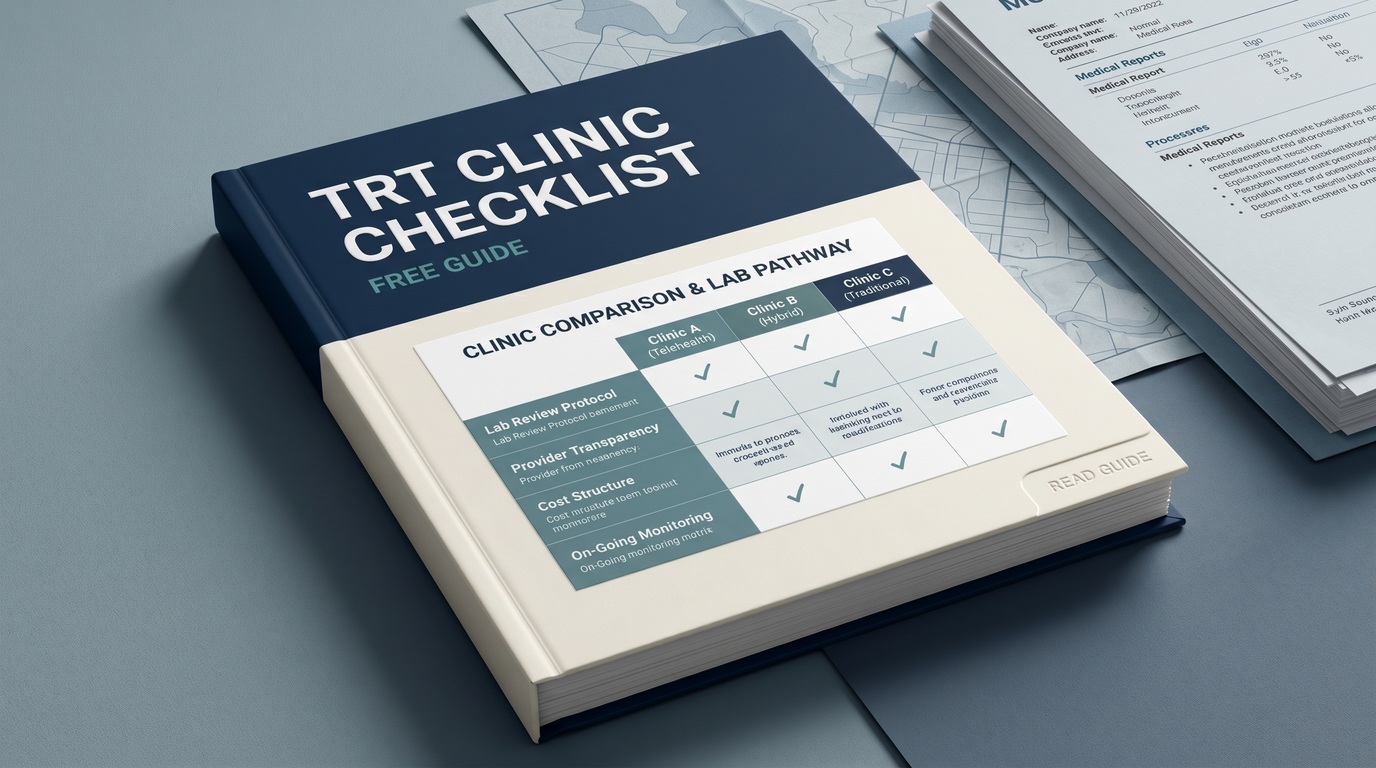
How to Choose a TRT Clinic in Australia (The 7-Point Checklist)
Finding the right TRT clinic Australia requires due diligence. Here's what separates evidence-based providers from cash-for-prescription operations:1. Medical Board Registration & Specialisation
Verify your provider holds current registration with the Australian Medical Board. Look for practitioners with: - Endocrinology or urology specialisation - Sports medicine qualifications (for functional medicine approaches) - Anti-doping certification (if you're an athlete concerned about WADA compliance)2. Comprehensive Blood Testing Protocol
A quality TRT clinic Australia will test:| Test | Why It Matters |
|---|---|
| Total Testosterone | Baseline hormone levels |
| Free Testosterone | Biologically active hormone |
| SHBG | Sex hormone binding globulin—indicates metabolism issues |
| PSA | Prostate cancer screening |
| Haematocrit | Red blood cell concentration—monitoring for polycythaemia |
| Lipid Profile | Cardiovascular risk assessment |
| Iron Studies | Haemochromatosis screening |
3. Formulation Standards
Australian TRT clinics should use: - TGA-approved injectables: Testosterone enanthate or cypionate (100-250mg/mL) - Compounded formulations: Only from TGA-registered compounding pharmacies with GMP certification - Transdermal gels: Androgel, Testogel (PBS-listed options)4. Monitoring Frequency
Post-initiation monitoring should occur at: - Week 4-6: Initial response check - 3 months: Dose adjustment period - 6 months: Comprehensive review - Annually: Long-term safety monitoring5. Telehealth Compliance
If using telehealth TRT Australia services, ensure the clinic complies with the Medicare Telehealth Guidelines and maintains interstate prescribing rights (critical if you're in WA or NT where regulations vary).6. Emergency Protocol
Ask: "What happens if I experience a severe allergic reaction or injection site complication?" Legitimate TRT clinics Australia provide emergency contact numbers and local referral networks.7. Transparency on Costs
Avoid clinics that hide behind "membership fees." You should receive itemised quotes showing: - Consultation fees ($150-$300) - Blood test costs ($150-$250) - Medication costs ($80-$200/month depending on formulation) - Monitoring fees (often bundled)Red Flags vs Green Flags: Spotting Quality TRT Providers
🚩 RED FLAGS (Avoid Immediately)
- "Guaranteed" results in social media ads without medical consultation
- Prescribing without blood work or using patient self-reported symptoms only
- Non-TGA approved compounds or "research chemicals" sold as TRT
- Pressure to buy expensive "packages" upfront before consultation
- Claims of "FDA-approved" products (Australia uses TGA, not FDA)
- No physical address or only P.O. box listed
- WADA non-compliance without disclosure (if you're a tested athlete)
✅ GREEN FLAGS (Quality Indicators)
- Registered pharmacists reviewing prescriptions (dual-check system)
- Integration with pathology providers like Sonic Healthcare or Sonic Health
- Electronic health records accessible to you (patient portal)
- Peer-reviewed protocols referenced in their methodology
- Clear informed consent documents discussing risks (infertility, acne, sleep apnoea)
- Medicare rebates available for initial consultations (if eligible)
TRT Clinic Australia: Cost Breakdown & What's Included
Understanding the economics of TRT in Australia helps you avoid predatory pricing. Here's the realistic cost structure:Initial Setup Costs
| Item | Cost Range (AUD) | Notes |
|---|---|---|
| Initial Consultation | $200-$350 | Telehealth slightly cheaper |
| Comprehensive Blood Panel | $180-$280 | Varies by pathology provider |
| Testosterone Gel (PBS) | $10-$30/month | With prescription benefit |
| Testosterone Injections | $80-$150/month | Depends on dose & compounding |
| Follow-up Consultation | $100-$200 | Often discounted for ongoing patients |
Annual Cost Estimates
Conservative Estimate: $2,500-$4,000 AUD per year for comprehensive TRT with monitoring.
Warning: Any clinic quoting under $1,000/year likely skips essential monitoring or uses unsafe compounds. Conversely, premium clinics charging $8,000+ often include unnecessary "biohacking" add-ons not required for standard TRT.
Telehealth TRT vs In-Person: Australian Regulatory Considerations
The COVID-19 pandemic accelerated telehealth adoption, but Australian men must understand the nuances:Telehealth TRT Australia: Pros
- Convenience for interstate patients (critical for WA, NT, Tasmania residents) - Lower consultation costs - Digital health records and automated reminders - Access to specialised endocrinologists regardless of locationTelehealth TRT Australia: Cons
- Interstate prescribing restrictions: Some states require local pathology testing - Physical exams limited: Cannot assess injection sites or prostate (DRE) remotely - Medicare rebate limitations: Some telehealth consultations don't attract rebatesThe Hybrid Model
The gold standard for TRT clinic Australia services combines: 1. Initial in-person consultation with bloodwork 2. Telehealth monitoring for dose adjustments 3. Annual in-person reviews for physical examinationsState-by-State Considerations
New South Wales & Victoria: Full telehealth TRT permitted with proper registration.
Western Australia: Stricter controls on injectable prescriptions; often requires in-person follow-up.
Northern Territory: Limited telehealth infrastructure; hybrid models preferred.
FAQ: TRT Clinic Australia Questions Answered
1. Is TRT legal in Australia?
Yes, TRT is fully legal and regulated by the TGA and AMB. However, testosterone is a prescription-only medication (Schedule 4), meaning it cannot be legally obtained without a valid prescription from a registered Australian medical practitioner. Possession without prescription is illegal under the Poisons Standard.2. How long does TRT take to work?
According to Australian clinical guidelines: - Weeks 1-2: Improved mood and energy - Weeks 4-6: Libido improvements, better sleep quality - 3-6 months: Muscle mass gains, fat loss, optimal energy levels - 6-12 months: Maximum benefits including bone density improvements3. Can I fly with TRT medication?
Yes, but carry your prescription and a letter from your TRT clinic Australia provider. Australian Customs allows personal use quantities (generally 3 months supply) with proper documentation. Keep medications in carry-on luggage to avoid temperature extremes in cargo holds.4. Will TRT affect my fertility?
Yes—TRT suppresses natural testosterone production and can reduce sperm count. However, many Australian TRT clinics now offer TRT with fertility preservation using hCG (human chorionic gonadotropin) or clomiphene citrate to maintain testicular function. Discuss this upfront if you plan future fatherhood.5. Are there Medicare rebates for TRT?
Initial consultations may attract Medicare rebates if you have a chronic disease management plan (CDMP) or referral from a GP. However, ongoing TRT management typically falls under private health, as it's often considered lifestyle optimisation rather than treatment of acute illness. Check with your specific TRT clinic Australia provider.6. What if I'm an elite athlete?
Testosterone is prohibited by WADA (World Anti-Doping Agency) without a Therapeutic Use Exemption (TUE). If you compete in WADA-regulated sports, your TRT clinic Australia must help you navigate TUE applications. Some athletes opt for clomiphene-based therapy instead, which isn't prohibited.7. How do I verify a TRT clinic's credentials?
Check the Australian Medical Board Register for practitioner registration. Verify the clinic's pharmacy is TGA-registered via the TGA Business Registration database. Legitimate TRT clinics Australia will provide their registration numbers upon request.Conclusion: Making Your Choice
Choosing the right TRT clinic Australia isn't just about convenience—it's about long-term health optimisation. The Australian healthcare system offers robust protections, but only when you engage with properly registered practitioners using evidence-based protocols.Your Action Plan:
- Get baseline bloodwork through a pathology provider like Sonic or Australian Clinical Labs
- Verify credentials on the Medical Board website
- Request a consultation to discuss your specific goals
- Review the treatment protocol before signing—ensure it includes monitoring schedules
- Start conservatively—most Australian endocrinologists begin with low doses and titrate based on bloodwork
Remember: TRT is a long-term commitment. The right TRT clinic Australia will be with you for years, adjusting protocols as you age and your needs evolve. Don't sacrifice quality for convenience—your endocrine health deserves evidence-based care.
Disclaimer: This content is for informational purposes only and does not constitute medical advice. Always consult with a registered Australian medical practitioner before starting TRT. Varney Health is a telehealth clinic providing men's health optimisation services across Australia.
Questions to ask before acting on this
Use this as a filter before you bookmark, share, or act on the article.
- 1
What symptom, lab marker, or risk does this change?
- 2
Which baseline tests should be checked before any treatment decision?
- 3
What would make this unsuitable for me?
- 4
What follow-up or monitoring would a clinician expect?
The caveat that keeps this useful
Treatment choices need a clinician who can see your history, medication use, blood work, and risk factors. A blog post should help you ask better questions, not self-prescribe.
Want this reviewed properly?
Use the assessment to give the clinic context before a doctor reviews suitability. It does not replace clinical advice.