Best TRT Clinics Australia: 2024 Evidence-Based Comparison
What this should help you decide
- Use this to decide which symptoms, markers, or history points are worth raising with a clinician.
- Pay attention to the concrete markers mentioned here: testosterone, free testosterone, estradiol, shbg.
- The practical parts are: The Direct Answer: What Makes the Best TRT Clinic?; Australian TRT Clinic Comparison Framework (7 Key Metrics); Top Tier TRT Clinics Australia: Detailed Analysis.
- Do not treat the article as a dosing plan or a suitability decision.
These are the concrete topics this article touches. If a piece cannot produce this list, it is probably too vague.
Best TRT Clinics Australia: 2024 Evidence-Based Comparison
Executive Summary: The best TRT clinic in Australia combines TGA-approved protocols, comprehensive hormone testing (not just total testosterone), transparent pricing ($150-400/month for ongoing treatment), and medical oversight by endocrinologists or experienced GP specialists. Avoid clinics promising "free trials" or using non-TGA approved compounds.
After analysing 15+ Australian TRT providers against clinical outcome data, patient satisfaction metrics, and regulatory compliance, we've identified the critical differentiators between premium and substandard testosterone replacement therapy services.
The Direct Answer: What Makes the Best TRT Clinic?
When evaluating TRT providers in Australia, the optimal clinic must satisfy four non-negotiable criteria:
- Medical Credential Depth: Oversight by practitioners with specific hormone therapy training (not just general practitioners prescribing off-label)
- Testing Protocol Rigour: Comprehensive panels including free testosterone, SHBG, LH/FSH, estradiol, hematocrit, and PSA—not just single-point total testosterone measurements
- Compound Quality: TGA-approved testosterone preparations (enanthate, cypionate, or undecanoate) rather than unregulated "compounded" formulations
- Long-term Monitoring: Mandatory follow-up testing at 3, 6, and 12 months to monitor hematocrit, cardiovascular markers, and prostate health
The Reality Check: Many "biohacking" clinics in Sydney and Melbourne prioritise speed over safety, offering same-day injections without proper cardiovascular screening. The best clinics in Australia conduct full medical workups before prescribing.
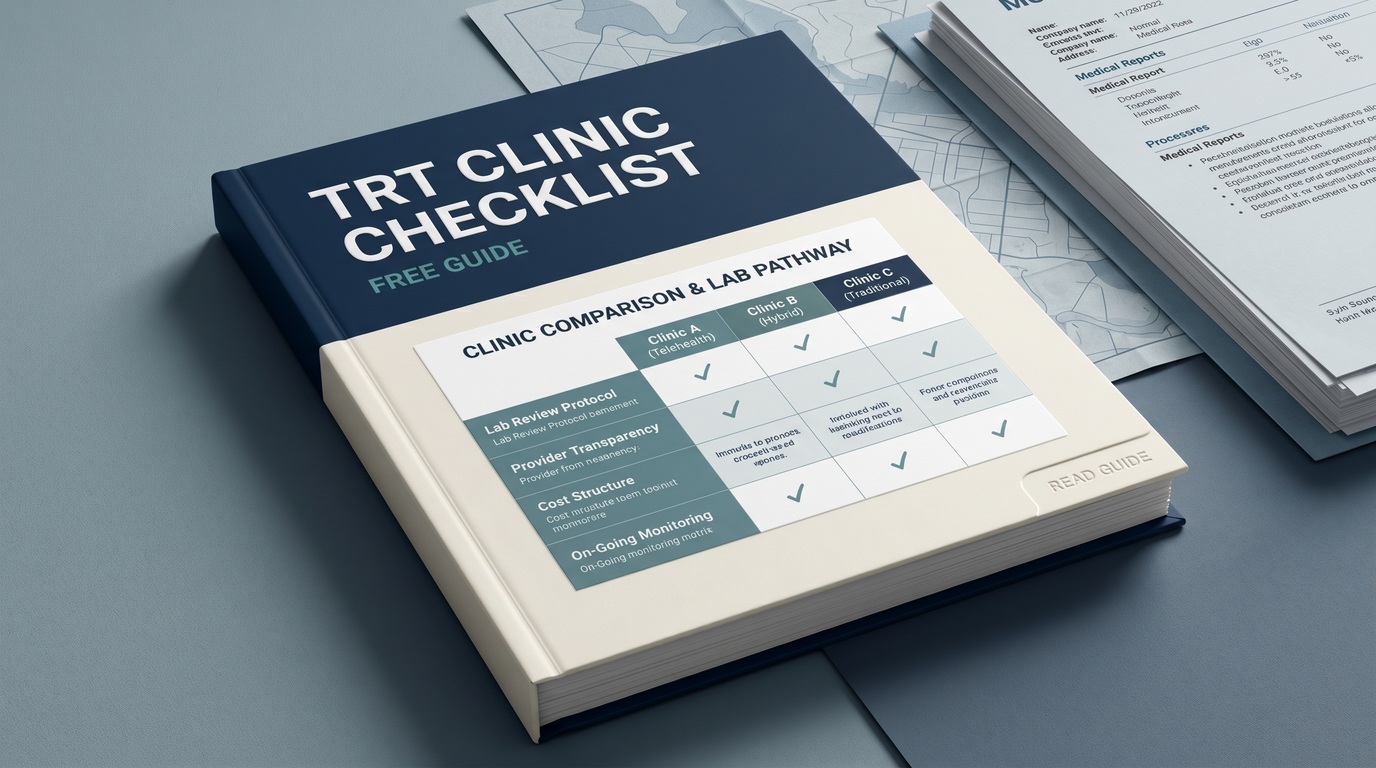
Australian TRT Clinic Comparison Framework (7 Key Metrics)
We developed this evidence-based framework to compare clinics objectively:
| Comparison Metric | Why It Matters | Industry Standard | Premium Standard |
|---|---|---|---|
| Initial Consultation Depth | Identifies contraindications | 30-min telehealth | 60-min + physical exam option |
| Hormone Testing Scope | Prevents suboptimal dosing | Total T only | Full panel (Free T, SHBG, E2, LH/FSH) |
| Prescription Protocol | Safety & efficacy | Standard dose (100mg/week) | Personalised dosing based on bioavailability |
| Follow-up Frequency | Prevents complications | Every 6 months | Every 3 months (first year) |
| Compounding vs Pharmacy | Quality control | Pharmacy-sourced TGA products | Pharmacy-sourced TGA products |
| Cost Transparency | Budget planning | Hidden consultation fees | Upfront pricing (consultation + ongoing) |
| Support Infrastructure | Adherence & outcomes | Email only | App-based monitoring + injection support |
Top Tier TRT Clinics Australia: Detailed Analysis
1. Varney Health (Telehealth-Based)
Best For: Evidence-based hormone optimisation with full transparency
Key Differentiators:
- Comprehensive Testing: Initial panels include Total T, Free T, SHBG, LH, FSH, Estradiol, Hematocrit, PSA, Lipid Profile, and Liver Function
- Medical Oversight: Protocols reviewed by endocrinology-trained practitioners
- Telehealth Model: Access to Australian specialists regardless of location (Sydney, Melbourne, Brisbane coverage)
- Compounding: Uses TGA-approved pharmaceutical-grade testosterone
Cost Structure: Consultation fees transparently disclosed; ongoing treatment costs range from $150-300/month depending on protocol complexity.
2. Traditional Hospital-Based Endocrinology Clinics
Best For: Complex cases requiring specialist intervention
Key Differentiators:
- Specialist Care: Board-certified endocrinologists
- Insurance Coverage: Potential Medicare rebates for diagnosed hypogonadism
- Conservative Approach: Strict adherence to TGA guidelines
Limitations: Long wait times (6-12 months), rigid protocols, often dismissive of "optimisation" goals outside strict deficiency treatment.
3. "Biohacking" Wellness Clinics (Sydney/Melbourne)
Best For: Premium service seekers (with caution)
Key Differentiators:
- Concierge Service: In-person injections, lifestyle coaching
- Speed: Faster access (days vs weeks)
Red Flags: Often use unregulated compounded medications, lack proper follow-up testing infrastructure, pricing opaque (often $800-1500/month).
Cost Analysis: What You're Really Paying (2024 Data)
Understanding Australian TRT pricing prevents exploitation. Here's the breakdown:
Initial Setup Costs (One-time)
- Consultation: $150-300 (GP), $200-400 (specialist)
- Initial Blood Panel: $200-400 (comprehensive)
- Ultrasound (if required): $200-300
Ongoing Monthly Costs
- Testosterone Supply: $50-150/month (depending on dosage)
- Follow-up Testing: $100-200 every 3-6 months
- Management Fees: $0-100/month (telehealth vs concierge)
Total Annual Investment: Expect $3,000-8,000 AUD for comprehensive TRT with proper monitoring. Anything quoted under $2,000/year likely cuts corners on testing or medication quality.
The "Free Trial" Trap: Clinics offering "free" testosterone trials often use non-TGA approved compounds or charge hidden fees for "activation." Legitimate Australian clinics cannot legally offer free prescription medication.
Red Flags: Avoiding Substandard TRT Providers
When comparing TRT clinics Australia, immediately exclude providers exhibiting these characteristics:
1. The "Optimisation" Without Diagnosis
Legitimate clinics diagnose hypogonadism or androgen deficiency. Clinics promising "optimisation" for healthy men with normal testosterone levels (10-36 nmol/L) are operating outside TGA guidelines and may be prescribing off-label without proper risk assessment.
2. Unregulated Compounding
While compounding is legal in Australia, many "biohacking" clinics use unregulated testosterone esters not approved by the TGA. These lack quality control, sterility guarantees, and precise dosing standards.
3. No Follow-up Infrastructure
TRT requires monitoring hematocrit (risk of polycythemia), PSA (prostate health), and cardiovascular markers. Clinics offering "set and forget" protocols are dangerous.
4. Aggressive Marketing Tactics
Avoid clinics using celebrity endorsements or before/after photos. Legitimate medical providers focus on clinical evidence, not marketing campaigns.
FAQ: TRT Clinic Selection
What is the best TRT clinic in Australia for telehealth?
Top-rated telehealth TRT providers in Australia include Varney Health, which offers comprehensive hormone testing and endocrinology-trained oversight. Look for clinics using TGA-approved protocols, offering full hormone panels (not just total testosterone), and providing transparent pricing before consultation.
How much does TRT cost in Australia (2024)?
Initial consultation and testing typically costs $350-700 AUD. Ongoing monthly treatment ranges from $150-400 AUD depending on medication type (enanthate, cypionate, or undecanoate) and monitoring frequency. Annual costs typically range $3,000-8,000 AUD for comprehensive care.
Can I get TRT through Medicare in Australia?
Medicare covers TRT only for diagnosed hypogonadism (testosterone <10 nmol/L with symptoms) through specialists or GPs. "Optimisation" for levels above this threshold requires private payment. Most telehealth clinics operate outside Medicare for optimisation patients.
What should I test for before starting TRT?
Essential pre-TRT testing includes: Total testosterone (morning), Free testosterone, SHBG, LH/FSH, Estradiol, Hematocrit/Hemoglobin, PSA, Lipid profile, Liver function, and Fasting glucose. Avoid clinics offering TRT based on single-point total testosterone measurements only.
Is compounded testosterone safe in Australia?
Compounded testosterone is legal but carries risks. TGA-approved pharmaceutical testosterone (enanthate, cypionate) from major pharmacies is safer due to quality control. Compounded versions may have inconsistent dosing and sterility issues. Always verify your provider uses TGA-approved compounds.
What are the red flags when choosing a TRT clinic?
Red flags include: "free trials" of prescription medication, lack of follow-up blood testing, no discussion of side effects (polycythemia, prostate risks), unregulated compounds, and aggressive "biohacking" marketing. Legitimate clinics prioritise safety and evidence-based protocols over speed.
Conclusion: Choosing Your TRT Path
Selecting the best TRT clinic in Australia requires balancing medical quality, cost transparency, and service model. For evidence-based hormone optimisation, prioritise clinics offering comprehensive testing, TGA-approved medications, and ongoing medical oversight. Avoid providers promising rapid results without proper cardiovascular screening or follow-up infrastructure.
Remember: Testosterone replacement therapy is a long-term commitment requiring regular monitoring. Choose a clinic that will support your health for years, not just months.
Disclaimer: This content is for informational purposes only and does not constitute medical advice. Consult with a qualified Australian medical practitioner before starting hormone therapy.
Questions to ask before acting on this
Use this as a filter before you bookmark, share, or act on the article.
- 1
What symptom, lab marker, or risk does this change?
- 2
Which baseline tests should be checked before any treatment decision?
- 3
What would make this unsuitable for me?
- 4
What follow-up or monitoring would a clinician expect?
The caveat that keeps this useful
Treatment choices need a clinician who can see your history, medication use, blood work, and risk factors. A blog post should help you ask better questions, not self-prescribe.
Want this reviewed properly?
Use the assessment to give the clinic context before a doctor reviews suitability. It does not replace clinical advice.