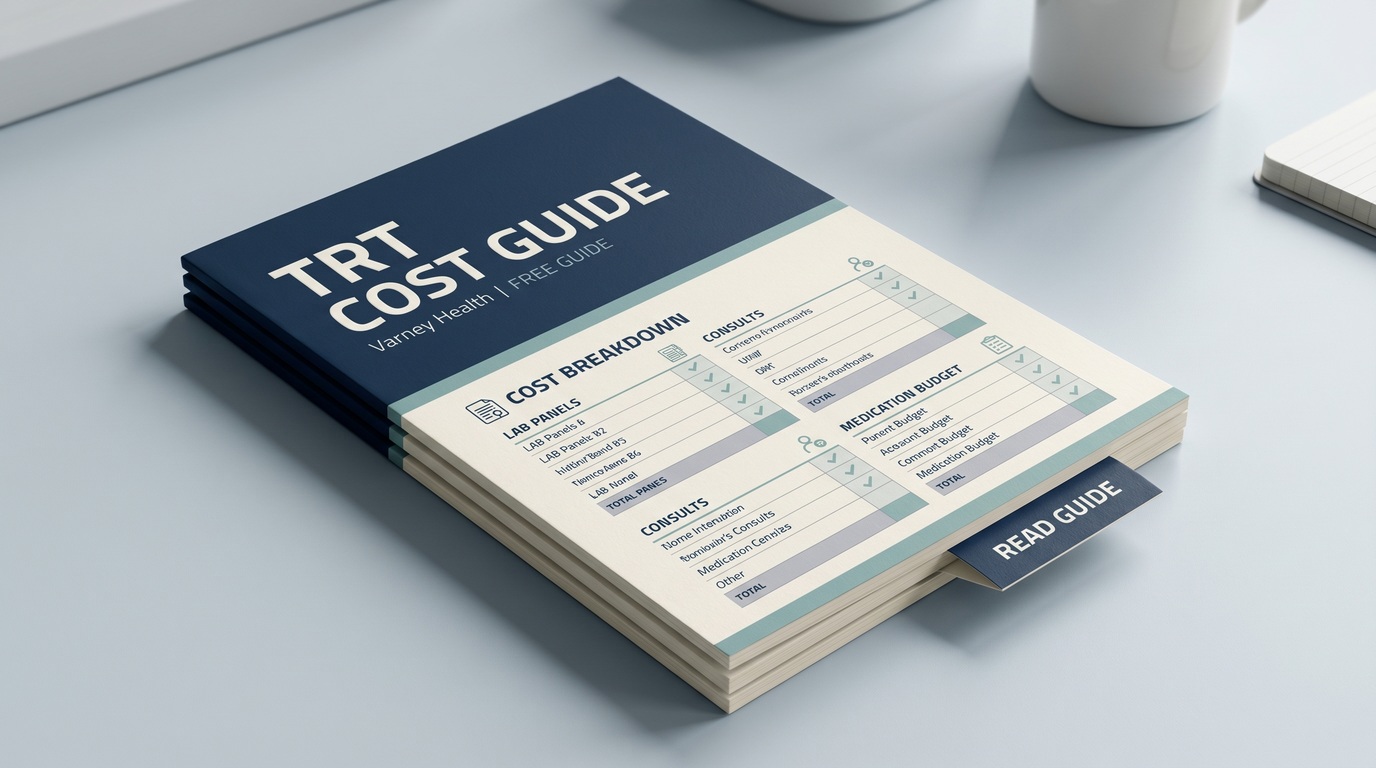
TRT Cost Per Month in Australia 2026: Complete Pricing Guide
What this should help you decide
- Use this to decide which symptoms, markers, or history points are worth raising with a clinician.
- Pay attention to the concrete markers mentioned here: testosterone, peptide.
- The practical parts are: The Real 2026 Cost of TRT Per Month: Quick Breakdown; TRT Cost Per Month by Delivery Method (Injections vs Gels vs Pellets); Brand Name vs Generic vs Compounded: Which Costs Less?.
- Do not treat the article as a dosing plan or a suitability decision.
These are the concrete topics this article touches. If a piece cannot produce this list, it is probably too vague.
TRT Cost Per Month in Australia 2026: Complete Pricing Guide
Last Updated: April 2026
If you're considering TRT (Testosterone Replacement Therapy) in 2026, here's the blunt truth: the average Australian man pays between $120–$350 per month for ongoing treatment, excluding initial testing and consultation fees. However, this figure varies drastically depending on whether you choose injections, gels, pellets, or patches—and whether you qualify for PBS (Pharmaceutical Benefits Scheme) subsidies.
Most competitor guides are outdated, citing 2023–2024 pricing that ignores the 2026 PBS updates and inflation-adjusted pharmacy costs. Below is the definitive 2026 breakdown based on current telehealth clinic data, GP consultation rates, and TGA-regulated pharmaceutical pricing.
The Real 2026 Cost of TRT Per Month: Quick Breakdown
Before diving into specifics, here's what you can expect to pay in 2026:
- Initial Setup (Testing + Consultation): $300–$600 (one-time)
- Ongoing Medication (Monthly): $60–$180 (injections), $80–$200 (gels), $800–$1,500 every 3–6 months (pellets)
- Follow-up Blood Tests: $100–$250 every 3–6 months
- Doctor Consultations (Ongoing): $150–$350 every 3–6 months
- Total Monthly Cost (Stable Patient): $120–$350/month
Practitioner Insight: Many men underestimate the cost of ancillary treatments. If you're under 45 and want to preserve fertility, adding HCG (Human Chorionic Gonadotropin) adds another $80–$120/month. If you need SERMs (like Clomid) to maintain testicular size or manage oestrogen, that's another $60–$120/month. The "base" TRT cost often doesn't include these critical add-ons.
TRT Cost Per Month by Delivery Method (Injections vs Gels vs Pellets)
The administration method is the single biggest factor in your monthly bill. Here's the 2026 pricing reality:
1. Injectable Testosterone (Most Cost-Effective)
Monthly Cost: $60–$150 (generic) or $120–$200 (brand name)
Injections remain the gold standard for cost-effectiveness in 2026. Testosterone Cypionate or Enanthate (generic) costs approximately $40–$80 per vial, lasting 4–6 weeks depending on dosage. Brand-name options (like Sustanon 250) cost $80–$150 per vial.
Pros: Lowest cost per mg, highest bioavailability, steady levels with weekly dosing. Cons: Requires self-injection or nurse visits ($50–$100 per visit if outsourced).
2. Transdermal Gels (Convenience Premium)
Monthly Cost: $80–$200 (private) or $35–$45 (PBS subsidised)
Androgel or Testogel costs $80–$120 per tube (30g) privately, lasting 1–2 weeks. PBS-subsidised gels are available if your doctor deems you eligible (typically severe hypogonadism with documented symptoms), bringing the cost down to the PBS patient co-payment of $31.60 (standard) or $7.70 (concession).
Pros: No needles, steady absorption. Cons: 2–3x more expensive than injections, risk of transfer to partners/children, inconsistent absorption in hot weather (critical for Australian summers).
3. Testosterone Pellets (Semi-Annual Investment)
Cost: $800–$1,500 per insertion (every 3–6 months)
Pellets cost $800–$1,500 per procedure in 2026, including the implantation fee and the pellets themselves. This breaks down to $133–$500 per month, making it the most expensive option unless you factor in the convenience of not handling medication daily.
Pros: Hands-off, stable levels for 3–6 months. Cons: Highest cost, surgical insertion required, risk of extrusion (pellet falling out), difficult to adjust dosage mid-cycle.
4. Testosterone Patches (Rare in Australia)
Monthly Cost: $150–$250 (if available)
Patches are rarely prescribed in Australia due to skin irritation issues and higher costs. When available, they cost $150–$250 monthly.
Brand Name vs Generic vs Compounded: Which Costs Less?
This is where most guides fail to provide detail. In 2026, the TGA (Therapeutic Goods Administration) has tightened regulations on compounded testosterone, making generic pharmaceutical-grade injections the safest and cheapest option.
| Option | Monthly Cost (2026) | Quality Control | Availability |
|---|---|---|---|
| Generic (Pharmaceutical) | $60–$100 | High (TGA approved) | Every pharmacy |
| Brand Name | $120–$200 | High | Major pharmacies |
| Compounded | $80–$150 | Variable (pharmacy-dependent) | Specialist compounding pharmacies only |
Practitioner Insight: Avoid unregulated compounded testosterone from online "wellness" clinics that aren't TGA-accredited. In 2026, we've seen cases of contaminated compounded testosterone causing severe infections. Stick to pharmaceutical-grade generic Testosterone Cypionate or Enanthate from reputable pharmacies.
Long-Term TRT Cost Projections: 1, 5, and 10-Year Treatment Plans
Most men stay on TRT indefinitely (80–90% of patients continue beyond 5 years). Here's what that commitment looks like financially:
Year 1 (Setup + Stabilisation)
Total: $2,000–$3,500
Includes initial consultations ($300–$600), blood tests ($200–$400 for full panel), and 12 months of medication ($1,500–$2,000). Year 1 is expensive due to frequent monitoring (blood tests every 4–8 weeks).
Years 2–5 (Stable Treatment)
Annual Cost: $1,500–$2,500 per year
5-Year Total: $7,500–$12,500
Once stable, consultations drop to 2–3 times yearly ($300–$900 annually), blood tests to 2–3 times yearly ($300–$600 annually), and medication remains steady ($1,000–$1,500 annually).
10-Year Projection (Including Ancillary Treatments)
10-Year Total: $15,000–$30,000
If you require HCG ($1,000–$1,500/year) or SERMs ($700–$1,200/year) to maintain fertility or manage side effects, add 30–50% to the base cost. Over a decade, this adds $10,000–$15,000 to the total.
Hidden Costs Most Clinics Don't Tell You About
Competitors list medication costs but omit these 2026 realities:
- Fertility Preservation (HCG): $80–$120/month. If you want children, HCG is mandatory to prevent testicular atrophy and maintain spermatogenesis.
- Anti-Oestrogen Therapy (SERMs): $60–$120/month. Clomid or Arimidex may be needed if oestrogen rises, causing gyno or emotional instability.
- Prostate Monitoring (PSA Tests): $50–$100 every 6–12 months (not always included in standard blood panels).
- Red Blood Cell Management: If your haematocrit rises above 54%, you may need therapeutic phlebotomy ($100–$200 per session) or dosage adjustment.
- Compounded Medication Premium: Some telehealth clinics charge 30–50% more for "custom" compounded formulations, which are often unnecessary.
- Pharmacy Delivery Fees: $10–$25 per delivery if using home delivery services (common in regional Australia).
Medicare Rebates and Private Insurance in 2026
Understanding rebates is crucial for accurate cost calculation:
Medicare Rebates (2026 Rates)
- GP Consultation: $35.80 rebate (bulk-billed if eligible, otherwise out-of-pocket $80–$180)
- Specialist Consultation: $80.00 rebate (out-of-pocket $120–$320)
- PBS Medication: $31.60 co-payment (standard), $7.70 (concession card)
- Blood Tests (Pathology): $10–$30 rebate for basic tests, $50–$100 for full hormone panels
2026 Regulation Update: Medicare bulk-billing for TRT consultations is rare (<5% of clinics offer it). Most telehealth clinics operate outside Medicare, charging $300–$500 flat-fee consults that include pathology scripts.
Private Health Insurance
Most private health funds cover TRT consultations under "General Practitioner" or "Specialist Medical" extras, but not the medication itself (unless PBS-subsidised). Typical coverage:
- GP consult: $20–$50 rebate
- Specialist consult: $40–$80 rebate
- Pathology: $30–$60 rebate
Tax Deduction: In 2026, you can claim TRT costs as a medical expense if your total out-of-pocket medical expenses exceed 10% of your adjusted taxable income (or $2,500, whichever is lower). Keep receipts for medication, consultations, and blood tests.
GP vs Specialist vs Telehealth: Which Costs Less?
Here's the 2026 clinic-type breakdown:
| Clinic Type | Initial Cost | Ongoing Monthly Cost | Pros | Cons |
|---|---|---|---|---|
| GP (General Practitioner) | $80–$180 (consult) + $100–$250 (tests) | $120–$200/month | Cheapest option, Medicare bulk-billing possible | Less specialised knowledge, may not offer pellets or peptides |
| Endocrinologist/Specialist | $200–$400 (consult) + $150–$300 (tests) | $150–$250/month | Expertise in complex cases, can prescribe pellets | Most expensive, long wait times (3–6 months) |
| Telehealth TRT Clinic | $300–$500 (initial consult + tests) | $180–$350/month (all-inclusive packages) | Convenience, all-inclusive pricing, fast access | Premium pricing, medication costs often bundled at markup |
Practitioner Insight: Telehealth clinics often bundle costs ($500–$1,000 initial, then $200–$400/month all-inclusive), which can be more expensive than GP care but offers convenience and specialised protocols. For men in regional Australia or those valuing time over money, the $200–$300/month premium is often worth it.
Frequently Asked Questions
How expensive is TRT in Australia in 2026?
On average, expect to pay $120–$350 per month for ongoing treatment, plus $300–$600 for initial setup (testing and diagnosis). Injectable testosterone is the cheapest option ($60–$150/month), while pellets cost $133–$500/month equivalent.
How much is a 3-month supply of TRT?
A 3-month supply of injectable testosterone costs $180–$450 (generic), while gels cost $240–$600 (private) or $100–$135 (PBS subsidised). Telehealth clinics often charge $600–$1,200 for a 3-month all-inclusive package including consults and pathology.
Do you stay on TRT forever?
Yes, TRT is typically lifelong (80–90% of patients continue beyond 5 years). Testosterone levels rarely return to normal after stopping, especially if treatment continues for more than 12 months. However, some men "cycle off" annually for 4–6 weeks, though this requires careful medical supervision and adds complexity (and cost) to management.
Is TRT normally covered by insurance?
Medicare covers consults and PBS-subsidised medications (gels only, not injections), but not private telehealth or compounded medications. Private health insurance may rebate 50–70% of consultation costs but rarely covers the medication itself. You cannot claim TRT as a tax deduction unless your total medical expenses exceed 10% of your income.
Can I get TRT on the PBS in 2026?
Yes, but only for gels/creams (not injections) and only if you meet strict criteria: clinically low testosterone (<8 nmol/L), documented symptoms (libido loss, fatigue, muscle loss), and failure of lifestyle interventions. The PBS co-payment is $31.60 (standard) or $7.70 (concession) per month.
Why do telehealth clinics cost more than GPs?
Telehealth clinics offer specialised protocols, faster access (no 3-month wait), and bundled services (pathology, scripts, consults) that GPs don't provide. The $100–$200/month premium buys convenience and expertise in optimisation (not just disease management).
What's the cheapest way to get TRT in Australia 2026?
Find a bulk-billing GP, get a prescription for generic Testosterone Cypionate injections, and fill it at a community pharmacy. This costs $60–$100/month plus $100–$200 every 3–6 months for blood tests. Avoid compounded medications and pellets if cost is your primary concern.
Disclaimer: Prices reflect 2026 Australian market rates and may vary by state, pharmacy, and individual clinical needs. This guide is for informational purposes only and does not constitute medical advice. Consult a registered Australian healthcare provider before starting TRT.
Questions to ask before acting on this
Use this as a filter before you bookmark, share, or act on the article.
- 1
What symptom, lab marker, or risk does this change?
- 2
Which baseline tests should be checked before any treatment decision?
- 3
What would make this unsuitable for me?
- 4
What follow-up or monitoring would a clinician expect?
The caveat that keeps this useful
Treatment choices need a clinician who can see your history, medication use, blood work, and risk factors. A blog post should help you ask better questions, not self-prescribe.
Want this reviewed properly?
Use the assessment to give the clinic context before a doctor reviews suitability. It does not replace clinical advice.