Best Australian TRT Clinic 2025: 8 Top Providers Reviewed
What this should help you decide
- Use this to decide which symptoms, markers, or history points are worth raising with a clinician.
- Pay attention to the concrete markers mentioned here: testosterone, free testosterone, estradiol, shbg.
- The practical parts are: What is the Best Australian TRT Clinic?; 8 Top Australian TRT Clinics Reviewed (2025); TRT Clinic Comparison Table.
- Do not treat the article as a dosing plan or a suitability decision.
These are the concrete topics this article touches. If a piece cannot produce this list, it is probably too vague.
What is the Best Australian TRT Clinic?
The best Australian TRT clinic depends on your specific clinical presentation, but for comprehensive hormone optimisation with peptide integration, Varney Health and The Testosterone Clinic lead the market. However, telehealth providers like Better Health Clinic offer accessibility, while specialist endocrinology practices provide in-person care for complex cases.
Choosing the right provider requires evaluating: AHPRA-registered physician oversight, laboratory testing protocols, treatment customisation, pricing transparency, and geographic accessibility. Australia's TRT landscape ranges from $200-$800 monthly, with telehealth dominating 70% of the market due to accessibility and cost-efficiency.
8 Top Australian TRT Clinics Reviewed (2025)
1. Varney Health
Best for: Biohackers seeking TRT + peptide therapy integration
Varney Health represents the new generation of Australian men's health optimisation, combining traditional TRT with cutting-edge peptide protocols (CJC-1295, Ipamorelin, BPC-157) for comprehensive hormonal and metabolic optimisation.
Pros:
- Personalised protocols combining testosterone with evidence-based peptides
- AHPRA-registered Australian doctors providing oversight
- Comprehensive baseline testing including free T, SHBG, LH, FSH, and lipids
- Telehealth convenience with Australian-based support
- Monthly monitoring included in subscription models
Cons:
- Higher price point ($400-$600/month) compared to basic telehealth
- Requires initial consultation before prescribing
- Primarily telehealth-focused (limited in-person options)
2. The Testosterone Clinic
Best for: Men requiring specialist endocrinology oversight
Based in Melbourne, this clinic offers traditional in-person care with specialist endocrinologists, making it ideal for men with complex comorbidities (diabetes, cardiovascular disease) requiring medical supervision beyond basic TRT.
Pros:
- Specialist endocrinologists on staff (not just GPs)
- In-person consultations available
- Comprehensive management of complications (sleep apnoea, cardiovascular risk)
- Traditional medical oversight aligning with TGA guidelines
- Access to injectable formulations with proper medical supervision
Cons:
- Geographic limitation (Melbourne-based primarily)
- Higher consultation costs ($300-$500 initial)
- Longer wait times for appointments (2-4 weeks typical)
- Less flexible than telehealth for ongoing monitoring
3. Better Health Clinic
Best for: Budget-conscious beginners to TRT
One of Australia's largest telehealth TRT providers, Better Health Clinic offers accessible entry points for men seeking testosterone replacement with streamlined online processes and competitive pricing.
Pros:
- Lower entry price point ($200-$300/month)
- Fast online assessment and prescription process
- Nationwide coverage via telehealth
- Established provider with extensive patient base
- Simple testosterone-only protocols
Cons:
- Generic protocols with limited customisation
- Minimal peptide or advanced therapy options
- Less comprehensive testing (often basic T only)
- Higher patient-to-doctor ratios may affect personalisation
- Limited support for complex cases
4. TRT Clinic Australia
Best for: Subscription-based ongoing monitoring
TRT Clinic Australia operates on a subscription model emphasising ongoing monitoring and dose optimisation, positioning itself as a long-term partner in hormonal health rather than just prescription service.
Pros:
- Subscription model includes ongoing monitoring
- Nationwide telehealth coverage
- Focus on dose optimisation over time
- Integration of lifestyle coaching
- Transparent pricing structure
Cons:
- Higher ongoing monthly costs ($350-$500/month)
- Limited face-to-face options
- Can feel impersonal for some patients
- Variable quality of doctor oversight
5. Men's Health Clinic
Best for: Integrative approach with physical locations
Operating multiple physical locations across major Australian cities, Men's Health Clinic offers an integrative approach combining TRT with nutrition, exercise programming, and traditional medical care.
Pros:
- Physical locations in Sydney, Melbourne, Brisbane
- Multi-disciplinary team (doctors, dietitians, trainers)
- Integrative approach to men's health
- Access to compounded formulations
- Comprehensive testing including genetic markers
Cons:
- Expensive initial consultations ($400-$600)
- Variable quality between locations
- Pressure to purchase additional services
- Higher overall cost of care
6. Hormone Health
Best for: Premium Sydney-based specialist care
Hormone Health positions itself as a premium provider with Sydney-based specialists focusing on evidence-based hormone optimisation with emphasis on research-backed protocols and individualised care.
Pros:
- Research-backed protocols
- Specialist physicians with hormone focus
- Premium patient experience
- Comprehensive testing including DHEA-S, cortisol, estradiol
- Integration of lifestyle medicine
Cons:
- High cost ($500-$800/month)
- Limited availability and booking delays
- City-focused (Sydney primary)
- May be overkill for straightforward cases
7. TRT Australia
Best for: Direct-to-consumer fast access
TRT Australia operates as a direct-to-consumer telehealth service focusing on rapid access to testosterone therapy with minimal barriers to entry, suitable for men prioritising speed over personalisation.
Pros:
- Fastest online assessment process
- Lowest price point ($150-$250/month)
- No appointment required
- Simple user interface
- Quick prescription turnaround
Cons:
- Less medical oversight than premium providers
- Generic protocols with minimal customisation
- Quality of physicians varies
- Minimal ongoing support or monitoring
- Potential for overtreatment without proper screening
8. The Male Hormone Clinic
Best for: Biohackers seeking longevity-focused TRT
The Male Hormone Clinic combines TRT with longevity medicine and biohacking approaches, appealing to the 30-45 demographic interested in optimisation rather than just deficiency management.
Pros:
- Longevity-focused approach
- Peptide therapy expertise (BPC-157, TB-500, etc.)
- Biohacking integration
- Advanced testing (DUTCH, genetic markers)
- Focus on optimisation vs. replacement
Cons:
- Very expensive ($600-$1000/month)
- Niche focus may not suit standard TRT needs
- Limited geographic presence
- Marketing-heavy approach
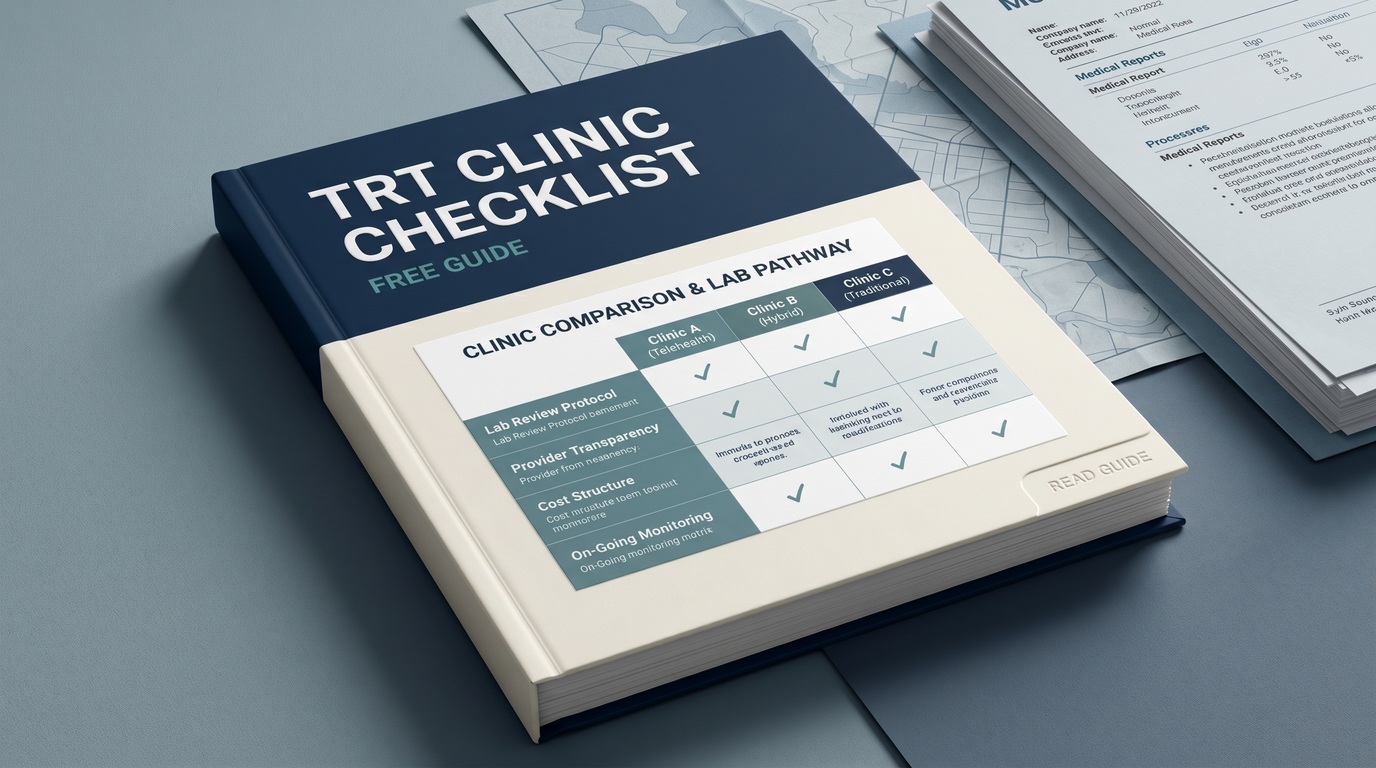
TRT Clinic Comparison Table
Comparing Australia's leading TRT providers across key decision factors:
| Provider | Monthly Cost | Initial Consult | Location | Peptides | Monitoring |
|---|---|---|---|---|---|
| Varney Health | $400-$600 | $150 | Telehealth (Aus) | Yes | Monthly |
| Better Health Clinic | $200-$300 | $100 | Telehealth | No | Quarterly |
| The Testosterone Clinic | $350-$500 | $300-$500 | Melbourne (In-person) | Minimal | 3-6 Monthly |
| TRT Clinic Australia | $350-$500 | $200 | Telehealth | Yes (Basic) | Monthly |
| Men's Health Clinic | $400-$700 | $400-$600 | Major Cities | Yes | 3 Monthly |
| Hormone Health | $500-$800 | $400 | Sydney | Yes | Monthly |
| TRT Australia | $150-$250 | $50-$100 | Telehealth | No | 6 Monthly |
| The Male Hormone Clinic | $600-$1000 | $300 | Telehealth | Yes (Advanced) | Monthly |
How to Choose Your TRT Provider
Selecting the best Australian TRT clinic requires evaluating four critical factors:
1. Medical Oversight Quality
Verify that your provider employs AHPRA-registered physicians with endocrinology or men's health specialisation. Avoid providers using only nurse practitioners for initial prescriptions. Check if doctors review every lab result personally or delegate to algorithms.
2. Testing Protocols
Adequate TRT requires comprehensive baseline testing: free testosterone, SHBG, total testosterone, LH, FSH, estradiol, CBC, lipids, PSA (if over 40), and liver function. Providers offering only "free T" testing may miss underlying pathologies.
3. Treatment Customisation
Generic protocols suit some, but optimisation requires individualised dosing based on lab results, symptoms, and goals. Ask about: injection frequency options (weekly vs bi-weekly), formulation choices (testosterone cypionate vs enanthate vs undecanoate), and adjunct therapies (aromatase inhibitors, hCG, peptides).
4. Cost Transparency
Beware of hidden costs: some clinics advertise low monthly fees but charge $300+ for lab tests, $200 for consultations, and $150 for delivery. Calculate total first-year cost including initial testing, consultation, and ongoing monitoring.
Frequently Asked Questions
What is the average cost of TRT in Australia?
Australian TRT ranges from $200-$800 monthly, depending on provider type. Telehealth clinics typically charge $200-$400/month including medication and monitoring. Specialist in-person clinics cost $400-$800/month plus consultation fees. Medication alone costs $50-$150/month depending on formulation.
Is TRT legal without a prescription in Australia?
No. Testosterone is a Schedule 4 (Prescription Only) medication under the Therapeutic Goods Act. Possession without prescription carries legal risk. Legitimate TRT requires medical consultation, blood testing, and ongoing monitoring by an AHPRA-registered physician.
How long does TRT take to work in Australia?
Men typically report energy improvements within 2-4 weeks, libido changes within 4-6 weeks, and full physical benefits (muscle mass, fat loss) within 3-6 months. Lab optimisation (hematocrit, estradiol) requires 3-6 months of dose titration.
What's the difference between TRT and biohacking?
TRT (Testosterone Replacement Therapy) treats clinical hypogonadism (T <10nmol/L or symptomatic T <12nmol/L) to restore physiological levels. Biohacking seeks optimisation beyond baseline for performance enhancement. Australian medical guidelines support TRT for deficiency; biohacking exists in a grey area.
Can I get TRT through Medicare?
Yes, TRT is Medicare-subsidised when prescribed for clinical hypogonadism meeting diagnostic criteria. However, telehealth-only providers often operate outside Medicare billing, charging full private rates. In-person specialist clinics typically bill Medicare partially, reducing out-of-pocket costs.
What blood tests are required before starting TRT?
Minimum requirements: Total testosterone (morning draw), Free testosterone, SHBG, LH, FSH, CBC (hematocrit), Lipids, PSA (men over 40), Liver function, and Estradiol. Comprehensive providers add DHEA-S, cortisol, IGF-1, and insulin resistance markers.
Are peptide therapies legal in Australia?
Yes, but regulation varies. Some peptides (CJC-1295, Ipamorelin) are research chemicals without TGA approval for human use, while others (BPC-157) exist in regulatory grey areas. Reputable providers disclose legal status and obtain informed consent. Avoid clinics selling "research chemicals" without medical oversight.
Questions to ask before acting on this
Use this as a filter before you bookmark, share, or act on the article.
- 1
What symptom, lab marker, or risk does this change?
- 2
Which baseline tests should be checked before any treatment decision?
- 3
What would make this unsuitable for me?
- 4
What follow-up or monitoring would a clinician expect?
The caveat that keeps this useful
Treatment choices need a clinician who can see your history, medication use, blood work, and risk factors. A blog post should help you ask better questions, not self-prescribe.
Want this reviewed properly?
Use the assessment to give the clinic context before a doctor reviews suitability. It does not replace clinical advice.