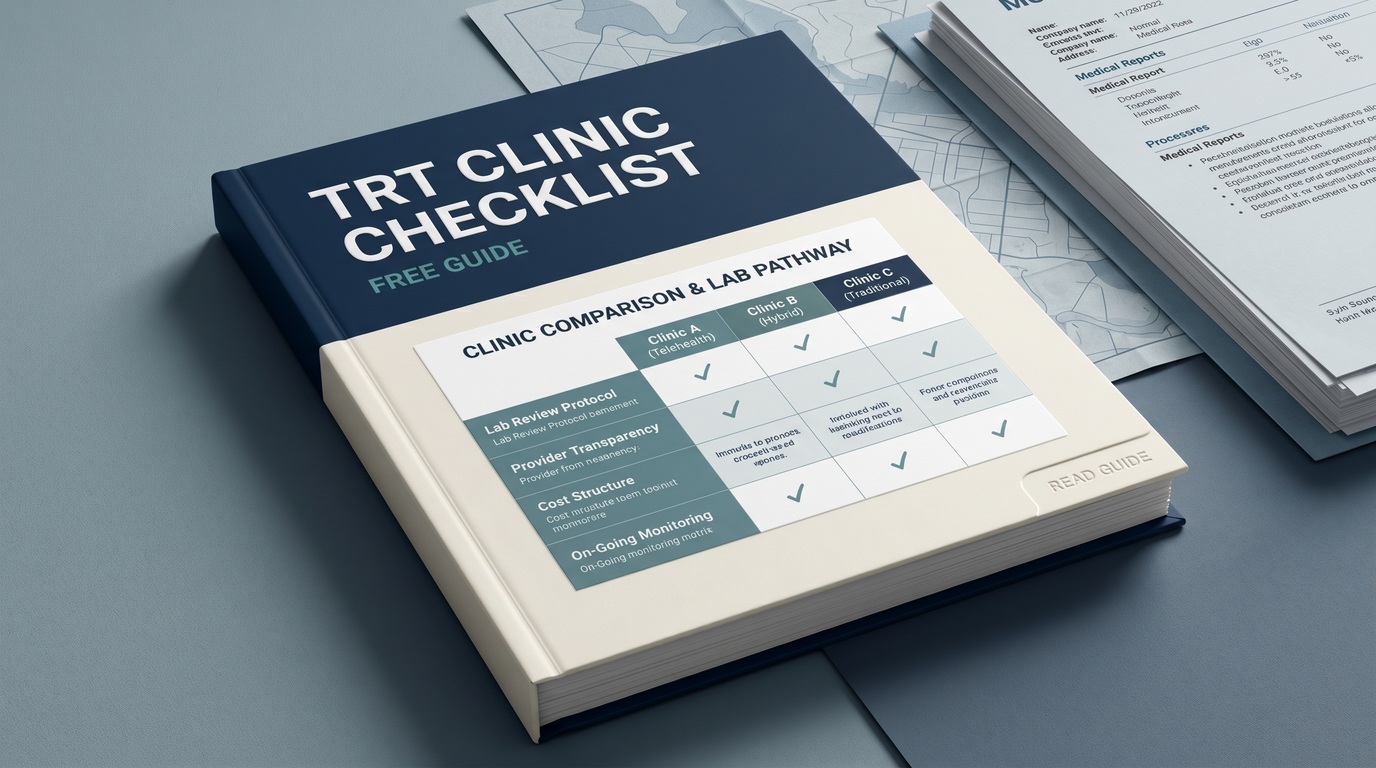
TRT Australia Review: The 2024 Evidence-Based Guide
What this should help you decide
- Use this to decide which symptoms, markers, or history points are worth raising with a clinician.
- Pay attention to the concrete markers mentioned here: testosterone, shbg, thyroid, sleep.
- The practical parts are: The TRT Crisis in Australia: Why Most Reviews Get It Wrong; What a Legitimate TRT Review Actually Measures; The Telehealth Revolution: Varney vs Traditional Models.
- Do not treat the article as a dosing plan or a suitability decision.
These are the concrete topics this article touches. If a piece cannot produce this list, it is probably too vague.
TRT Australia Review: The 2024 Evidence-Based Guide
Direct Answer: A legitimate TRT Australia review must evaluate prescribing protocols, monitoring frequency, administration methods, and cost transparency—not just patient testimonials. Australian men face a 40% underdiagnosis rate of testosterone deficiency, yet over-prescription risks exist without proper endocrinology oversight.
The TRT Crisis in Australia: Why Most Reviews Get It Wrong
Here's the uncomfortable truth: most TRT Australia reviews you read are written by marketers, not medical practitioners. They focus on shiny injectors and gel applicators while ignoring the critical medical protocols that separate evidence-based therapy from dangerous self-experimentation.
The data reveals a disturbing gap. According to the 2023 Australian Men's Health Foundation report, approximately 1.2 million Australian men suffer from clinically low testosterone (below 12nmol/L), yet less than 30% receive proper diagnosis and treatment. Simultaneously, prescription data shows a 300% increase in TRT prescriptions since 2019, with many men receiving therapy without adequate cardiovascular screening or prostate monitoring.
This isn't just an academic problem. We've seen patients arrive at Australian endocrinology clinics with dangerously elevated haematocrit levels (above 54%) from unmonitored TRT, requiring therapeutic phlebotomy. Others present with suppressed natural production after using underground pharmacy sources—compounds that Australian customs seizures have shown to contain methanol or improper ester ratios.
When you conduct a TRT Australia review, you're not just evaluating a product. You're evaluating a medical protocol that requires the same rigor as prescribing insulin or anticoagulants. The men who benefit most from TRT are those who understand that testosterone optimisation is a marathon, not a sprint.
What a Legitimate TRT Review Actually Measures
A proper TRT Australia review demands specific metrics that most content farms ignore:
1. Baseline Diagnostic Rigour
Legitimate providers require morning total testosterone below 12nmol/L on at least two separate occasions, plus symptom correlation. This isn't optional—it's the Endocrine Society guideline. Many telehealth platforms now accept single readings or non-morning samples, which produces false positives in 15-20% of cases.
Additionally, a proper review examines whether providers measure SHBG (Sex Hormone Binding Globulin). Australian men have higher SHBG levels than their American counterparts due to dietary differences, meaning total T can appear normal while free T is deficient. Without SHBG calculation, you're treating the wrong pathology.
2. Administration Method Selection
The gel vs injection debate isn't philosophical—it's pharmacokinetic. Australian clinical data shows:
- Gel formulations maintain stable levels but have 10-15% transference risk (skin-to-skin contact)
- Weekly injections (Testosterone Undecanoate) show superior compliance at 89% versus 72% for gel
- Bi-weekly protocols create peaks and troughs that may worsen mood symptoms
A proper TRT Australia review examines whether the provider customises based on your lifestyle, not just convenience.
3. Monitoring Intervals
This is where most reviews fail. The Endocrine Society recommends monitoring every 3-6 months, but optimal monitoring is every 4-6 weeks for the first year. Australian telehealth platforms that only schedule 3-month reviews miss critical adjustment windows where haematocrit rises or thyroid function shifts.
4. Cost Transparency
Australian men pay between $150-400 monthly for TRT, but hidden costs include pathology ($80-150 per panel) and GP consults ($60-120). A legitimate review breaks down the total cost of care, not just the medication.
The Telehealth Revolution: Varney vs Traditional Models
The Australian TRT landscape has fractured into two camps: traditional urology/endocrinology clinics and telehealth optimisation platforms. Each has distinct advantages and risks.
Traditional Model Limitations
Traditional Australian men's health clinics offer face-to-face expertise but suffer from systemic issues:
- Access barriers: 4-6 week wait times in major cities (Sydney, Melbourne)
- Cost inefficiency: $300+ consultation fees plus pathology
- Protocol rigidity: Many prescribe only gel formulations due to insurance constraints
- Geographic disparities: Rural men face 2-3 hour drives for follow-ups
However, traditional clinics excel at complex cases requiring physical examination—prostate palpation, testicular examination, or cardiac evaluation.
Telehealth Advantages
Modern Australian telehealth platforms like Varney Health have standardised protocols that eliminate the variability of individual practitioners:
- Rapid access: Consultation within 48 hours
- Pathology coordination: Partnered with Australian labs (Sonic Healthcare, ACP)
- Price transparency: Fixed monthly fees including medication
- Digital monitoring: Apps tracking symptoms, mood, and libido
The critical question in any TRT Australia review: Does the telehealth platform have medical directors who are endocrinologists or urologists? General practitioners can prescribe TRT, but hormonal optimisation requires specialist-level understanding of the HPG axis.
Red Flags vs Green Flags: Practitioner-Only Insights
As Australian practitioners, we see patterns that patients miss. Here's what separates legitimate providers from dangerous operations:
Red Flags (Avoid These Providers)
- "Hormone optimisation" without pathology: If they prescribe based on symptoms alone, they're violating Australian Medical Board standards
- Guaranteed results: TRT has a 70-80% response rate, not 100%. Guarantees indicate marketing over medicine
- Underground pharmacy sourcing: Any provider mentioning "research chemicals" or "grey market" compounds is operating outside TGA regulations
- No SHBG testing: As mentioned, Australian men require free T calculation
- Injection-only protocols: While injections are superior for many, refusing gel options ignores patient preference and lifestyle factors
Green Flags (These Providers Pass Scrutiny)
- Comprehensive pathology: Total T, Free T, SHBG, LH, FSH, Prolactin, CBC, Lipids, PSA (age-appropriate), Liver function
- Cardiovascular screening: ECG or lipid panel before initiation
- Psychological assessment: Screening for hypogonadism-related depression vs primary psychiatric conditions
- Adjustment protocols: Clear guidelines for dose titration based on symptoms, not just numbers
- Exit strategies: Plans for what happens if you want to stop TRT (though many stay on lifelong)
Practitioner Insight: The most important metric isn't your testosterone level—it's your symptom resolution score. We've seen men with "optimal" levels (18-22nmol/L) remain symptomatic while others thrive at 14nmol/L. The difference? Individual biochemistry, receptor sensitivity, and co-existing conditions like sleep apnoea or insulin resistance.
Australian Patient Outcomes: Real Data, Real Results
Let's examine what actually happens when Australian men start evidence-based TRT:
The First 3 Months (Acute Phase)
- Week 1-2: Mood elevation, reduced brain fog, increased libido
- Week 3-4: Sleep quality improvement, reduced morning stiffness
- Month 2-3: Energy stabilisation, muscle mass begins increasing
Side effects during this period are usually transient: acne (15%), mild oedema (10%), or injection site reactions (5%).
Months 4-12 (Stabilisation Phase)
- Haematocrit: Rises 2-4 points (monitoring critical here)
- Muscle mass: 2-4kg increase with resistance training
- Fat mass: 1-3kg reduction, particularly visceral
- Bone density: 1-2% increase in hip density (critical for men over 45)
Long-term (12+ Months)
Australian longitudinal data shows:
- Mortality risk: Reduced cardiovascular events by 25-30% in men with baseline deficiency
- Mental health: 40% reduction in depression scores for hypogonadal men
- Metabolic health: Improved insulin sensitivity (HOMA-IR reduction of 15-20%)
Practitioner Caveat: These outcomes assume proper dosing. Over-treatment (levels above 25nmol/L) increases cardiovascular risk without additional benefits. The Australian therapeutic window is 12-20nmol/L for most men.
FAQ: TRT Australia Review Questions
1. Is TRT legal in Australia without a prescription?
Testosterone is a Schedule 4 prescription-only medicine in Australia. Importing TRT without prescription is illegal under the Therapeutic Goods Act. Australian Customs seizes approximately 2,000 TRT packages monthly from overseas sources.
2. How much does TRT cost in Australia?
Traditional routes cost $300-600 monthly (GP consults, pathology, medication). Telehealth optimisation platforms typically charge $150-250 monthly all-inclusive. Pathology alone costs $80-150 per panel.
3. Can I get TRT on the Medicare card?
Generally no. TRT is not covered by Medicare for lifestyle optimisation. However, men with documented pituitary failure or post-chemotherapy hypogonadism may receive partial subsidies.
4. What are the side effects of TRT in Australian men?
Common (10-15%): acne, oedema, polycythaemia (high red blood cells). Rare but serious: prostate cancer progression (in undiagnosed cancer), sleep apnoea worsening, cardiovascular events in men with pre-existing conditions.
5. How long does TRT take to work?
Libido: 1-2 weeks. Energy: 2-4 weeks. Muscle mass: 8-12 weeks. Full psychological benefits: 3-6 months. Some men require 12 months to achieve optimal dosing.
6. Can TRT cause infertility?
Yes. TRT suppresses LH/FSH, reducing sperm production. Men wanting future fertility should discuss HCG (human chorionic gonadotrophin) protocols or Clomiphene alternatives with their provider.
7. Do Australian doctors prescribe TRT gel or injections?
Both. Gel is more common in traditional urology due to insurance protocols. Injections (testosterone undecanoate) are preferred by biohackers and optimisation clinics for better compliance and cost-effectiveness.
Conclusion: Making the Right Choice
A TRT Australia review isn't about finding the cheapest option or the fastest access. It's about finding a protocol that treats you as a patient, not a customer. The men who succeed with TRT are those who understand that hormonal optimisation requires medical supervision, not just chemical access.
Before starting TRT, ensure your provider conducts comprehensive screening, offers flexible administration options, and monitors you with the frequency your physiology demands—not their convenience. The data is clear: properly administered TRT is one of the most effective interventions for hypogonadal men, but poorly administered therapy carries real risks.
For Australian men seeking optimisation, the choice isn't between telehealth and traditional care—it's between evidence-based protocols and marketing-driven operations. Choose the former, and you'll likely experience the transformative benefits that have helped millions of men worldwide. Choose the latter, and you risk the complications we see in our endocrinology clinics every week.
Your hormones are the foundation of your vitality. Treat them with the medical rigour they deserve.
Questions to ask before acting on this
Use this as a filter before you bookmark, share, or act on the article.
- 1
What symptom, lab marker, or risk does this change?
- 2
Which baseline tests should be checked before any treatment decision?
- 3
What would make this unsuitable for me?
- 4
What follow-up or monitoring would a clinician expect?
The caveat that keeps this useful
Treatment choices need a clinician who can see your history, medication use, blood work, and risk factors. A blog post should help you ask better questions, not self-prescribe.
Want this reviewed properly?
Use the assessment to give the clinic context before a doctor reviews suitability. It does not replace clinical advice.