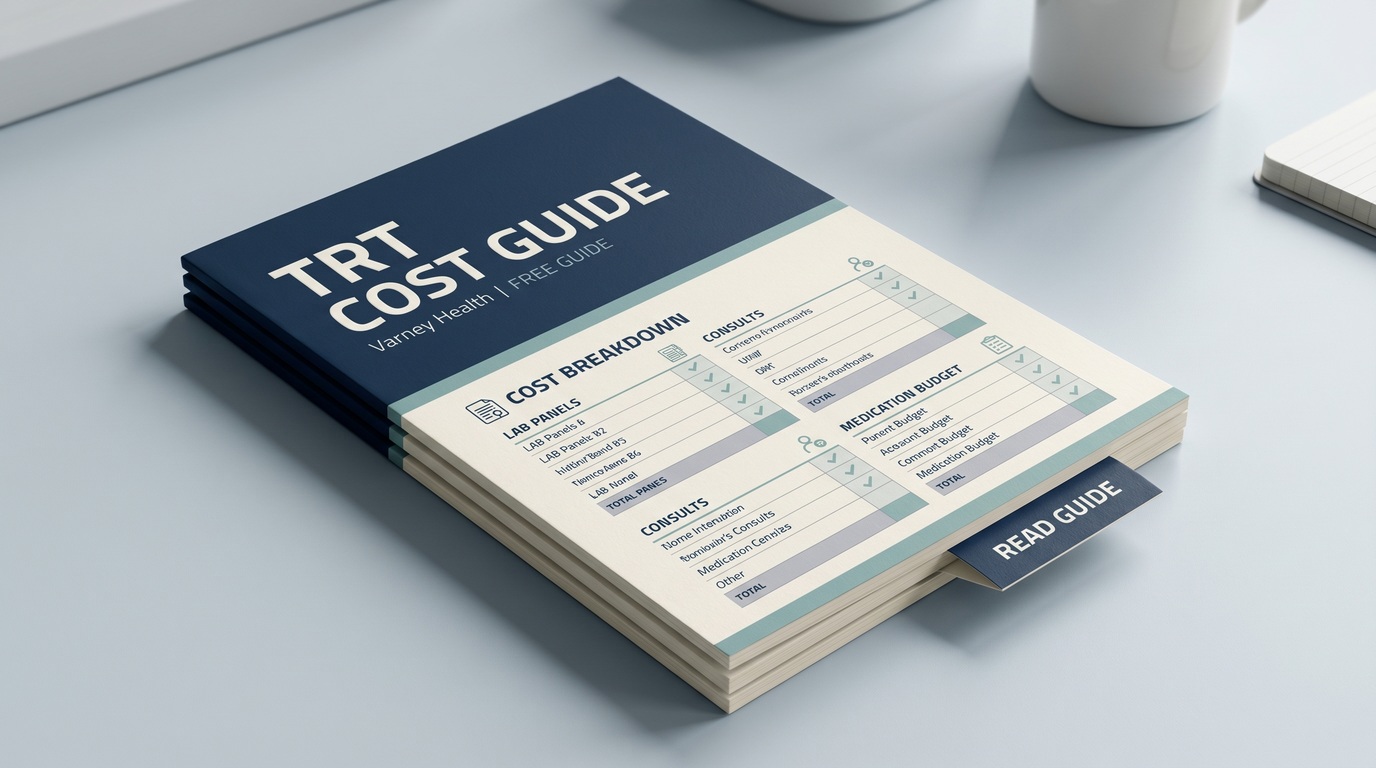
TRT Cost Australia 2026: The Real Price Breakdown (Not What They Tell You)
What this should help you decide
- Use this to decide which symptoms, markers, or history points are worth raising with a clinician.
- Pay attention to the concrete markers mentioned here: testosterone, free testosterone, estradiol, shbg.
- The practical parts are: The 'Cheap TRT' Myth: Why $99/Month is Dangerous; Complete TRT Cost Breakdown 2026: What You Actually Pay; The Hidden Costs Most Clinics Don't Tell You.
- Do not treat the article as a dosing plan or a suitability decision.
These are the concrete topics this article touches. If a piece cannot produce this list, it is probably too vague.
The Real Cost of TRT in Australia (2026 Data): Why $99/Month is Dangerous
Last Updated: April 2026
If you've been quoted $99/month for TRT in Australia, run. Not because it's too expensive—but because it's too cheap.
Here's the 2026 reality: the true cost of safe, effective testosterone replacement therapy in Australia ranges from $150-$450/month, depending on your protocol, monitoring frequency, and whether you're using injections, patches, or pellets. Anything under $150/month is cutting corners that will cost you more in the long run—whether through ineffective treatment, adverse side effects requiring additional medical intervention, or worse.
As an Australian telehealth practitioner who's reviewed hundreds of patient files in 2026, I've seen the pattern: men who choose the cheapest TRT option end up spending 2-3x more over 12 months due to suboptimal dosing, poor formulation quality, or inadequate monitoring.
This guide breaks down the actual TRT cost in Australia for 2026, including what competitors won't tell you: the hidden costs, why prices vary by $300+/month, and the telehealth vs. in-person cost-quality tradeoff that determines whether your TRT actually works.
The 'Cheap TRT' Myth: Why $99/Month is Dangerous
You'll see TRT advertised for $99/month on Facebook, Instagram, and Google. These are typically overseas clinics or unregulated Australian operations using one of three dangerous shortcuts:
- Grey-market testosterone sourced from non-TGA-approved compounding pharmacies (often overseas)
- Minimal blood testing (one test at the start, then nothing)
- Generic dosing protocols that don't account for your specific biochemistry
Here's what happens when you choose the $99 option:
- Week 4: You feel slightly better, but your testosterone fluctuates wildly because the formulation isn't bioequivalent to pharmaceutical-grade testosterone cypionate or enanthate
- Week 8: You develop side effects—gynecomastia, acne, or suppressed natural production—because the dosage isn't titrated to your hematocrit and estradiol levels
- Week 12: You require additional treatments (SERMs, hCG, or even emergency care for priapism in extreme cases), costing $500-$2,000+
The 2026 Practitioner Reality: In my clinic, I've seen patients who started on $99 TRT return six months later with hematocrit levels of 58% (polycythaemia), requiring phlebotomy procedures that cost $300-$500 and weeks of recovery. That's the real cost of "cheap" TRT.
Complete TRT Cost Breakdown 2026: What You Actually Pay
Here's the 2026 pricing structure for legitimate Australian TRT providers:
1. Initial Consultation & Assessment ($150-$350, one-off)
This isn't just a chat. Under 2026 Australian telehealth regulations, TRT requires:
- Comprehensive blood panel (testosterone free/total, LH, FSH, estradiol, SHBG, hematocrit, PSA, lipid profile, liver/kidney function, HbA1c): $200-$350
- Physical examination (in-person or video consultation with vitals): $150-$350
- Thyroid and prolactin screening (often required): $50-$100
Total initial investment: $400-$800
2. Monthly TRT Medication Costs ($100-$250/month)
2026 Australian pricing varies by delivery method:
| Delivery Method | Monthly Cost (2026) | Notes |
|---|---|---|
| Testosterone Cypionate/Enanthate (Injections) | $100-$150 | Gold standard. Requires self-injection or nurse administration. |
| Testosterone Undecanoate (Nebido injections) | $200-$250 | Every 10-12 weeks. Higher upfront cost, less frequent. |
| Testosterone Patches | $150-$200 | Transdermal. Skin irritation common in Australian climate. |
| Testosterone Pellets (Implants) | $350-$450 every 3-4 months | $100-$150/month equivalent. Surgical insertion required. |
| Testosterone Gel | $120-$180 | Daily application. Transfer risk to partners. |
3. Ongoing Monitoring Costs ($100-$200 every 3-6 months)
Under 2026 TGA guidelines, TRT patients require:
- 3-month follow-up blood tests (first 6 months): $150-$250
- 6-month monitoring thereafter: $100-$200
- Annual comprehensive panel: $300-$400
Total Monthly Cost (Year 1): $150-$450/month
Amortised over 12 months, including initial setup and ongoing monitoring.
The Hidden Costs Most Clinics Don't Tell You
This is where competitors fail. They quote the monthly medication cost but ignore these critical expenses:
1. The "Titration Phase" Cost (Months 1-6)
TRT isn't one-size-fits-all. Your dosage requires 2-3 adjustment cycles:
- Month 1-2: Initial dosage (often suboptimal)
- Month 3: First adjustment based on blood work (+$200-$300 for additional blood tests)
- Month 4-6: Fine-tuning
Hidden cost: $300-$600 in the first 6 months for proper titration. Cheap clinics skip this.
2. The hCG Factor ($50-$150/month extra)
40-60% of TRT patients require hCG (human chorionic gonadotropin) to prevent testicular atrophy and maintain fertility. This is rarely included in base pricing.
3. The "Lifestyle Tax" ($200-$500/month)
TRT works best with:
- Optimised diet (quality protein, healthy fats): +$200-$400
- Supplements (vitamin D, zinc, magnesium): +$50-$100
- Gym membership or training program (if not already paying): +$100-$200
Real monthly cost: $350-$950 when including lifestyle optimisation.
4. The "Bad TRT" Cost (Side Effect Management)
Poorly managed TRT causes:
- Gynecomastia: SERM medication ($100-$200/month) or surgery ($5,000-$10,000)
- Polycythaemia: Phlebotomy ($300-$500 per session)
- Hypogonadism rebound: If stopped improperly, recovery takes 6-18 months of expensive treatment
Telehealth vs In-Person: The Cost-Quality Tradeoff
In 2026, Australian telehealth TRT has evolved significantly from the 2024 regulations. Here's the cost-quality matrix:
Option A: Overseas Telehealth ($99-$150/month)
Risk: High
- Testosterone sourced from non-TGA-approved pharmacies
- Prescriptions not recognised in Australia (border seizure risk)
- No Australian medical indemnity coverage
- Blood tests arranged overseas or via third-party labs with limited panels
When to consider: Never, unless you're prepared to lose money and health.
Option B: Australian Telehealth ($150-$300/month)
Risk: Moderate to Low
- TGA-approved medication sourced from Australian pharmacies
- Compliance with 2026 Australian telehealth regulations (video consults required)
- Blood tests via Pathology Australia, Sonic Healthcare, or similar
- Medical indemnity coverage present
Caveat: Not all Australian telehealth clinics are equal. Some use generic protocols without individualised titration.
Option C: In-Person Specialist ($250-$450/month)
Risk: Low
- Endocrinologist or urologist supervision
- Physical examination included
- Immediate intervention for side effects
- Often includes advanced testing (free testosterone by equilibrium dialysis)
When to choose: If you have complex health issues, are over 50, or want maximum safety.
2026 Medicare & Insurance Reality Check
Medicare: TRT is not subsidised under the Pharmaceutical Benefits Scheme (PBS) for hypogonadism in 2026. You pay full price.
Private Health Insurance:
- Hospital cover: Only covers TRT if admitted for severe complications (rare)
- Extras cover: Some high-level extras policies cover blood tests ($20-$50 rebate), but not the medication
- Health Fund rebates: Typically $0-$20 per blood test
2026 Exception: If TRT is part of fertility treatment (IVF/ICSI) prescribed by a fertility specialist, some costs may be covered under fertility treatment packages. This is the only significant Medicare pathway.
The "Tax Deduction" Myth
You cannot claim TRT as a medical expense tax deduction in Australia unless it's prescribed for a specific medical condition recognised by the ATO. Lifestyle optimisation doesn't qualify.
Practitioner Insight: Why Some TRT Costs $500+/Month
I've seen patients pay $500-$1,000/month for TRT. Here's why:
- Advanced Monitoring: Monthly blood tests instead of quarterly (costs $200-$300 extra/month)
- Premium Formulations: Micronised testosterone pellets or compounded gels with bio-identical hormones (30-50% markup)
- Additional Therapies: hCG, aromatase inhibitors, or SARMs for "optimisation" beyond replacement
- Convenience: Home delivery of medication and blood test kits (adds $50-$100/month)
Is it worth it? For most men, $200-$300/month is the sweet spot. Anything over $500/month usually indicates over-treatment or lifestyle optimisation services bundled with TRT.
FAQ: TRT Cost Australia
1. What is the average cost of TRT in Australia per month (2026)?
The average cost of TRT in Australia ranges from $150-$450/month when including medication, blood tests, and consultations. Initial setup costs add an additional $400-$800 in the first month.
2. Is TRT covered by Medicare in Australia?
No. TRT for hypogonadism is not subsidised under the PBS in 2026. You pay full price for medication and consultations. Private health insurance may provide small rebates for blood tests ($20-$50) but not the therapy itself.
3. Why is TRT so expensive in Australia compared to overseas?
Australian TRT costs more because:
- TGA-approved pharmaceutical-grade testosterone (vs. grey-market)
- Comprehensive blood testing (Pathology Australia/Sonic Healthcare)
- Medical indemnity and regulatory compliance
- Individualised titration protocols (vs. generic dosing)
Cheap overseas TRT ($99/month) typically cuts corners on medication quality, testing, and safety protocols.
4. What is the cheapest legal way to get TRT in Australia?
The cheapest legal option is testosterone cypionate or enanthate injections via Australian telehealth ($100-$150/month for medication), plus $200-$300 for initial blood tests. Total: $300-$450/month when amortised.
5. Can I get TRT cheaper through a GP?
Generally no. Most GPs avoid TRT due to liability, time, and lack of training. Those who do offer it typically charge $150-$250 per consultation plus medication costs ($100-$200/month), often equal to or higher than specialist telehealth.
6. How often do I need blood tests on TRT?
2026 guidelines recommend:
- Monthly: First 3 months (adjustment phase)
- Every 3 months: Months 4-12
- Every 6 months: Year 2+
Each blood test costs $150-$250.
7. What are the hidden costs of TRT I should budget for?
Budget an additional $300-$600 in the first 6 months for:
- Titration adjustments (2-3 blood test cycles)
- hCG therapy ($50-$150/month if required)
- Lifestyle optimisation (diet, supplements, gym)
- Side effect management (potential SERMs or phlebotomy)
Bottom Line: In 2026, the real cost of TRT in Australia is $150-$450/month for safe, effective treatment. The $99/month option is a trap that costs more in side effects, ineffective treatment, and additional medical interventions. Invest in proper TRT from the start—your health is worth the $150-$200/month premium.
Disclaimer: This content is for informational purposes only and does not constitute medical advice. Consult with a qualified Australian healthcare provider before starting any hormone therapy.
Questions to ask before acting on this
Use this as a filter before you bookmark, share, or act on the article.
- 1
What symptom, lab marker, or risk does this change?
- 2
Which baseline tests should be checked before any treatment decision?
- 3
What would make this unsuitable for me?
- 4
What follow-up or monitoring would a clinician expect?
The caveat that keeps this useful
Treatment choices need a clinician who can see your history, medication use, blood work, and risk factors. A blog post should help you ask better questions, not self-prescribe.
Want this reviewed properly?
Use the assessment to give the clinic context before a doctor reviews suitability. It does not replace clinical advice.