
How to Integrate Private TRT with Medicare in Australia
Can you use Medicare for TRT? Learn how to integrate private telehealth prescriptions with the Australian Pharmaceutical Benefits Scheme (PBS) to save on treatment costs.
What this should help you decide
- Use this to decide which symptoms, markers, or history points are worth raising with a clinician.
- Pay attention to the concrete markers mentioned here: testosterone, estradiol, shbg, peptide.
- The practical parts are: The 'TRT + Medicare' Integration: What You Need to Know; Why Most Australian Men Overpay for TRT (The Integration Gap); Step 1: Setting Up Your Telehealth Script with a GP.
- Do not treat the article as a dosing plan or a suitability decision.
These are the concrete topics this article touches. If a piece cannot produce this list, it is probably too vague.
How to integrate private TRT with Medicare in Australia
Yes, you can claim Medicare rebates on your TRT protocols, but only if you navigate the gap between private telehealth prescriptions and the PBS schedule correctly. Most men in Australia doing TRT through private clinics are overpaying for their gear because they don't understand how to split their billing between the telehealth doctor (for the script) and their local GP (for the Medicare safety net). To legally integrate private TRT with Medicare, you must use a hybrid model where your telehealth practitioner provides the clinical authority and prescription, while you process the actual medication claim through a local pharmacy to access the Pharmaceutical Benefits Scheme (PBS) subsidies.
The 'TRT + Medicare' Integration: What You Need to Know
Let's cut through the noise. The Australian healthcare system is designed for "sick care," not optimisation, and the Pharmaceutical Benefits Scheme (PBS) reflects this. If your testosterone levels are 8 nmol/L and you have clinical symptoms, you get cheap, government-subsidised cream. But if you are a 35-year-old man with 12 nmol/L (low-normal) feeling like garbage, the PBS says your testosterone levels are fine.
This is where the integration gap lives.
Many men think how to get TRT in Australia involves a binary choice: cheap PBS cream via a local GP or expensive private compounded cream via a telehealth clinic. There is a middle ground. You can use a telehealth practitioner to manage your protocol and optimise your levels-using compounding where necessary-but you can still lean on Medicare for the blood work and consultation rebates if your paperwork is in order.
The secret isn't just buying the cheapest testosterone; it is understanding which parts of your TRT Australia journey are tax-deductible, Medicare-rebateable, or purely out-of-pocket.
Proprietary Insight: The Rebate Reality
In our clinic, we see a common pattern: high-performing men paying $300 per consult for telehealth and missing out on $80+ in rebates because the doctor isn't billing under the correct Medicare item numbers for "long consultations" or "mental health care plans" that often accompany hormonal decline. If you are paying full price for blood tests that are Medicare-rebatable (like Lipid panels, Liver Function, and Prolactin), you are burning cash. The script might be private, but the pathology doesn't always have to be.
Why Most Australian Men Overpay for TRT (The Integration Gap)
The vast majority of men we take over from other clinics are victims of the "all-inclusive" package model. They pay a monthly fee that covers everything-consults, scripts, bloods. It sounds convenient, but it is almost always the most expensive way to do TRT in Australia.
Here is the reality: When you bundle services, you lose transparency. You stop seeing that the blood test your clinic charged you $150 for is actually free if you take the referral to a public pathologist with a Medicare provider number. You stop realising that the consultation fee includes a 20-minute admin surcharge that Medicare doesn't recognise.
The "Private Prescription" Cost Trap
A private prescription cost Australia wide can vary wildly. If you are buying brand-name Andriol or Testogel from a chemist without a PBS script because your levels are "too normal" for the government's liking, you might be looking at $100+ per month out of pocket. However, if you work with a practitioner who understands how to document your clinical picture effectively-focusing on symptoms rather than just the number on the page-you can sometimes unlock PBS subsidies even if your total T is technically in the reference range.
But let's assume you are using Compounded Testosterone (which is often superior due to flexible dosing). This is never PBS subsidised. This is where the integration strategy shifts. You pay for the drug privately (usually $80-$120/month), but you should still be claiming on your consults.
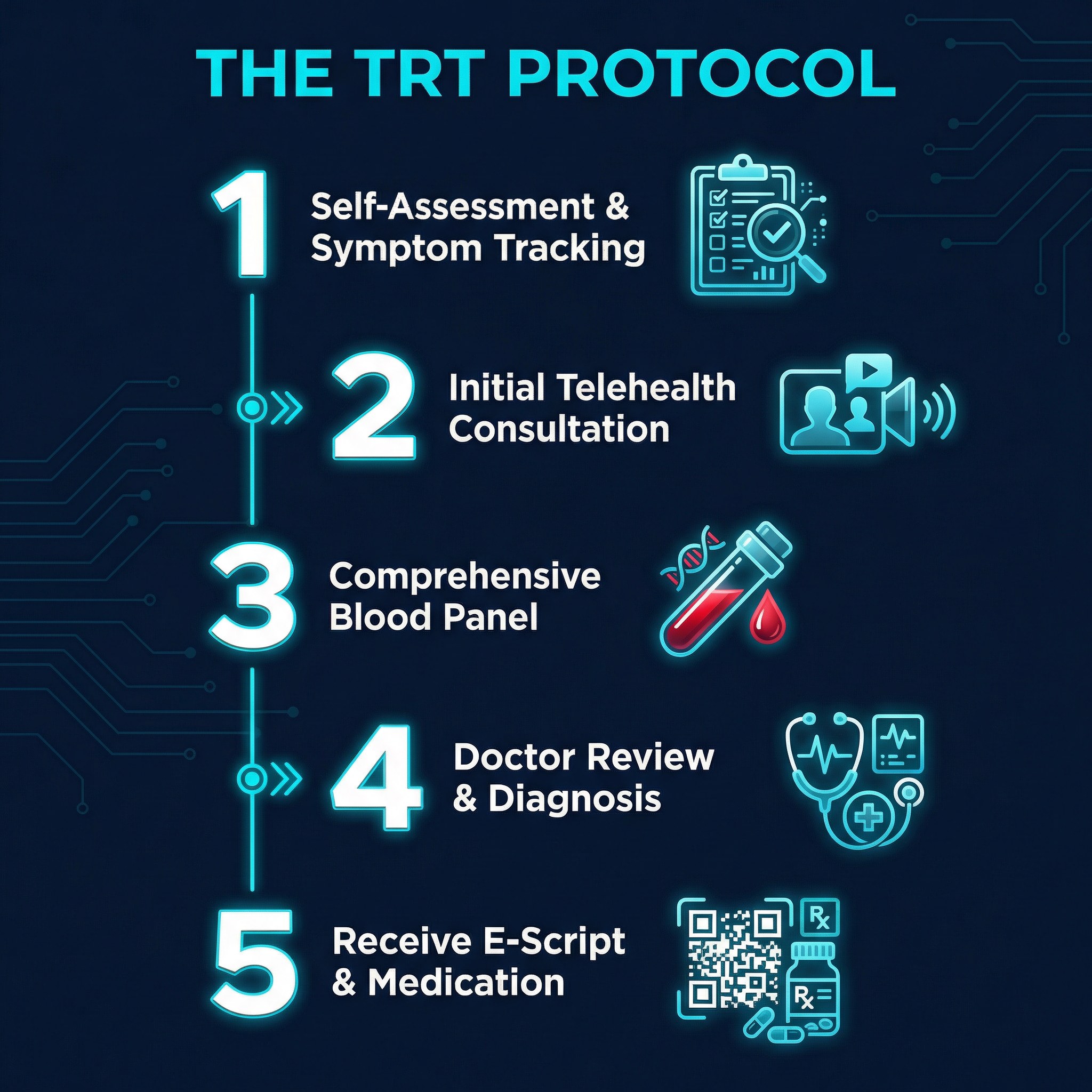
Step 1: Setting Up Your Telehealth Script with a GP
You cannot walk into a chemist and ask for TRT. You need a script. The most efficient way to get this without fighting a GP who thinks "normal is fine" is telehealth.
However, to integrate this with Medicare, you need a specific setup.
- Find a Telehealth Specialist: Look for a clinic that focuses on men's health optimisation, not just a generic GP online. They need to be willing to write a prescription for compounded testosterone or a brand name that isn't on the PBS if your levels don't meet the strict hypogonadism criteria.
- Request a Shared Care Letter: This is the step 99% of men miss. Ask your telehealth doc to send a letter to your local GP outlining the treatment plan. This doesn't mean the local GP has to prescribe it, but it creates a paper trail. It legitimises the treatment in the eyes of Medicare.
- Separate Your Billing: Ensure your telehealth provider provides you with an itemised receipt that includes the Medicare Item Number (e.g., 36, 44, or 51 for longer consults). If they don't itemise it, you can't claim the rebate.
Real-World Scenario
Last month, a client in Melbourne came to us spending $450 a month on a "concierge" TRT program. We broke it down. His actual medication cost was $90. The rest was padded "management fees." By moving to a direct-pay-per-consult model with us and claiming the Medicare rebate for the telehealth sessions himself, he dropped his monthly cost to $180. Same drugs, better blood work, less cost.
Step 2: Processing the Prescription at Your Local Pharmacy
Once you have that digital or paper script from your telehealth practitioner, you have a choice. Do you buy from a compound pharmacy the clinic recommends, or do you shop around?
For compounded testosterone, you are generally locked into specific compounding pharmacies. However, for brand-name medications (like Testogel or Reandron), you have power.
The Pricing Hack: Take your private script to a discount chemist (like Chemist Warehouse or a small independent compounding pharmacy). Do not assume the clinic's "partner pharmacy" is the cheapest. We often see men in Sydney paying a premium for convenience.
- PBS vs. Private: If your telehealth doctor has documented your condition correctly (using ICD-10 codes for hypogonadism or andropause), they might attempt to write a PBS authority script. If approved, your cost drops to the PBS co-payment (around $30).
- Private Script: If PBS is denied (common in optimisation cases), you pay full price. This is where knowing the private prescription cost Australia market is vital. Compounded Testosterone Enanthate usually costs between $80-$120 for a 10ml vial (200mg/mL), lasting a month or more depending on your dose.
Step 3: Maximising Medicare Rebates and Safety Nets
This is the engine room of the integration strategy. Most men view TRT as a purely private expense. They are wrong.
Medicare rebates apply to the medical management of your condition, not just the drug purchase. Your telehealth consults are medical services. Your blood tests are pathology services.
The Medicare Safety Net
If you are on TRT, you are likely getting bloods done every 3 to 6 months. You are seeing a doctor 2-4 times a year. These costs add up. Once you hit the Medicare Safety Net threshold (which resets on Jan 1st), your rebates for out-of-hospital services increase significantly.
For a single person in 2024, the threshold is around $2,500 (approximate, check current rates). Once you cross this, a standard telehealth consult that gave you $40 back might give you $80 back.
The Strategy: Do not let your telehealth clinic bulk bill you for a low amount to save you time. Pay the full fee, get the detailed receipt, and claim the full rebate back from Medicare. This pushes you toward the Safety Net faster.
What is Rebateable?
- Telehealth Consults: Yes (Item 104, 36, etc.).
- Blood Tests (LH, FSH, Total T, Estradiol, Prolactin, SHBG): Yes, if referred by a doctor.
- Bone Density Scans: Yes, if clinically indicated (common in long-term hypogonadism).
- The Actual Testosterone Gel/Injection: No. The drug itself is rarely covered unless you qualify for the PBS.
Troubleshooting: When Telehealth and PBS Don't Align
Sometimes, despite your best efforts, the system fights back. We see this weekly.
The Issue: Your telehealth doctor prescribes a compounded cream because it absorbs better than the gel. You go to the chemist, and they say "We can't fill this because it's not on the Australian Register of Therapeutic Goods (ARTG) for that specific indication."
The Fix: This is a grey area in TRT clinics Australia. Compounded medications are legal (Section 29 of the Therapeutic Goods Act), but pharmacists can be risk-averse. You need to use a compounding pharmacy that the telehealth clinic trusts implicitly. Do not waste time trying to explain "personalised medicine" to a retail pharmacist at a busy shopping centre. Go to the specialists.
The "Normal" Blood Work Barrier: Another common friction point is the GP referral for bloods. Your local GP might see your Total T is 15 nmol/L and refuse to bill the blood test through Medicare because "you don't need it."
The Workaround: Do not tell your local GP you are checking your testosterone because you want to feel jacked. Tell them you are monitoring for symptoms-fatigue, libido issues, metabolic health. A good telehealth practitioner will write the referral request in a way that triggers the medical necessity clause, making it harder for a GP to refuse the Medicare rebate on the pathology.

FAQ: Integrating TRT and Medicare
Can I get TRT on the PBS in Australia?
Yes, but only if you meet strict criteria for pathological hypogonadism (usually very low levels caused by pituitary or testicular failure). If your levels are low-normal due to age or stress, you will likely pay for a private prescription or compounded medication.
How much does TRT cost per month in Australia?
If subsidised by PBS, you pay the standard co-payment (approx $30). For private optimisation protocols using compounded testosterone, expect to pay between $80 and $150 per month for the medication, plus consultation fees.
Does Medicare cover telehealth appointments for TRT?
Yes. Medicare rebates apply to telehealth consultations provided the doctor is registered in Australia and the service is deemed medically necessary. You cannot claim rebates for "coaching" or "biohacking" calls, only clinical medical consults.
Is compounded testosterone legal in Australia?
Yes. Compounded testosterone is legal when prescribed by a doctor and prepared by a licensed compounding pharmacy. It is not on the PBS, so it is an out-of-pocket expense.
Can I use my Super to pay for TRT?
Generally, no. You cannot access your super early for TRT unless it is part of a specific medical treatment for a severe condition that meets strict early release criteria.
Your Next Steps
Stop paying the "ignorance tax" on men's health. If you are currently running a protocol or sitting on the fence because of the cost, run the numbers on the integration model.
- Audit your current spend: Are you claiming for your telehealth consults? Check your bank statements against your Medicare claims history.
- Check your script: Are you using a brand name that could be subsidised, or are you better off on a compounded dose?
- Book a review: If you feel like your current GP is dismissing your symptoms because "your levels are normal," you need a second opinion. Book a consultation with us to review your blood work and see if an optimisation protocol is right for you.
- Read more: Check out our blog for deep dives on Estradiol management and peptide therapy.
Questions to ask before acting on this
Use this as a filter before you bookmark, share, or act on the article.
- 1
What symptom, lab marker, or risk does this change?
- 2
Which baseline tests should be checked before any treatment decision?
- 3
What would make this unsuitable for me?
- 4
What follow-up or monitoring would a clinician expect?
The caveat that keeps this useful
Treatment choices need a clinician who can see your history, medication use, blood work, and risk factors. A blog post should help you ask better questions, not self-prescribe.
Want this reviewed properly?
Use the assessment to give the clinic context before a doctor reviews suitability. It does not replace clinical advice.