Modern weight-management treatments: what the evidence actually shows
A source-backed evidence snapshot for Australians: appetite biology, nausea, cravings, body composition, metabolic-rate myths and why clinician-led care still matters.

The useful answer
The old debate — medication or behaviour — is the wrong frame.
The critique is partly right
Nausea is real. Reduced appetite does not automatically improve diet quality. Stopping treatment often leads to regain. Most pivotal trials included lifestyle support.
But it is incomplete
Human studies show changes in hunger, energy intake, cravings, food preference and control of eating. Weight change is not simply “people feel sick”.
Care quality is the differentiator
Good care protects nutrition, muscle, side-effect tolerance and maintenance. Access alone is not a weight-management program.
Australian context
Weight management is a public-health issue, not a vanity category.
66%
Australian adults living with overweight or obesity in 2022.
26%
Children and adolescents aged 2–17 living with overweight or obesity.
8.4%
Disease burden attributed to overweight and obesity in AIHW reporting.
Source: Australian Institute of Health and Welfare overweight and obesity overview.
Evidence snapshot
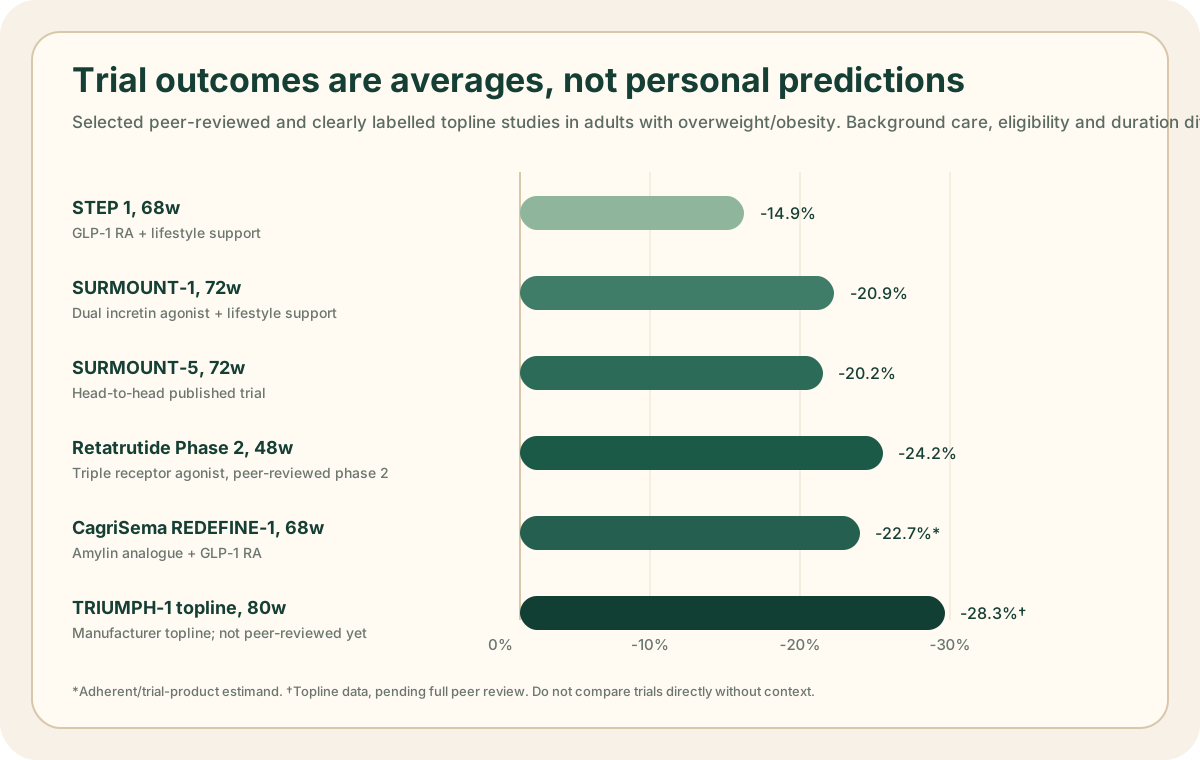
Clinical trials report averages under structured conditions.
Australian context
AIHW 2022
66% of adults and 26% of children/adolescents were living with overweight or obesity.
Public-health baseline, not a treatment outcome.
GLP-1 RA + lifestyle
STEP 1, 68 weeks
Mean body-weight change: -14.9% vs -2.4% placebo.
Nausea and GI events were common; trial included lifestyle support.
Dual incretin agonist + lifestyle
SURMOUNT-1, 72 weeks
Mean body-weight change up to -20.9% vs -3.1% placebo.
Discontinuation due to adverse events was dose-related and higher than placebo.
Lifestyle lead-in + clinician-supervised treatment
SURMOUNT-3
Participants first lost at least 5% with intensive lifestyle intervention; treatment then produced additional loss.
Strong evidence against the “medicine replaces behaviour” framing.
Withdrawal / maintenance
SURMOUNT-4 and STEP 1 extension
Stopping treatment was followed by substantial regain in controlled studies.
Supports chronic-care and maintenance planning.
Triple-receptor investigational pathway
Retatrutide phase 2 + TRIUMPH-1 topline
Phase 2 reported -24.2% at 48 weeks; May 2026 topline reported up to -28.3% at 80 weeks.
Topline phase 3 is not yet a peer-reviewed full publication.
Mechanisms
The strongest human evidence is appetite and intake — not a simple metabolism boost.
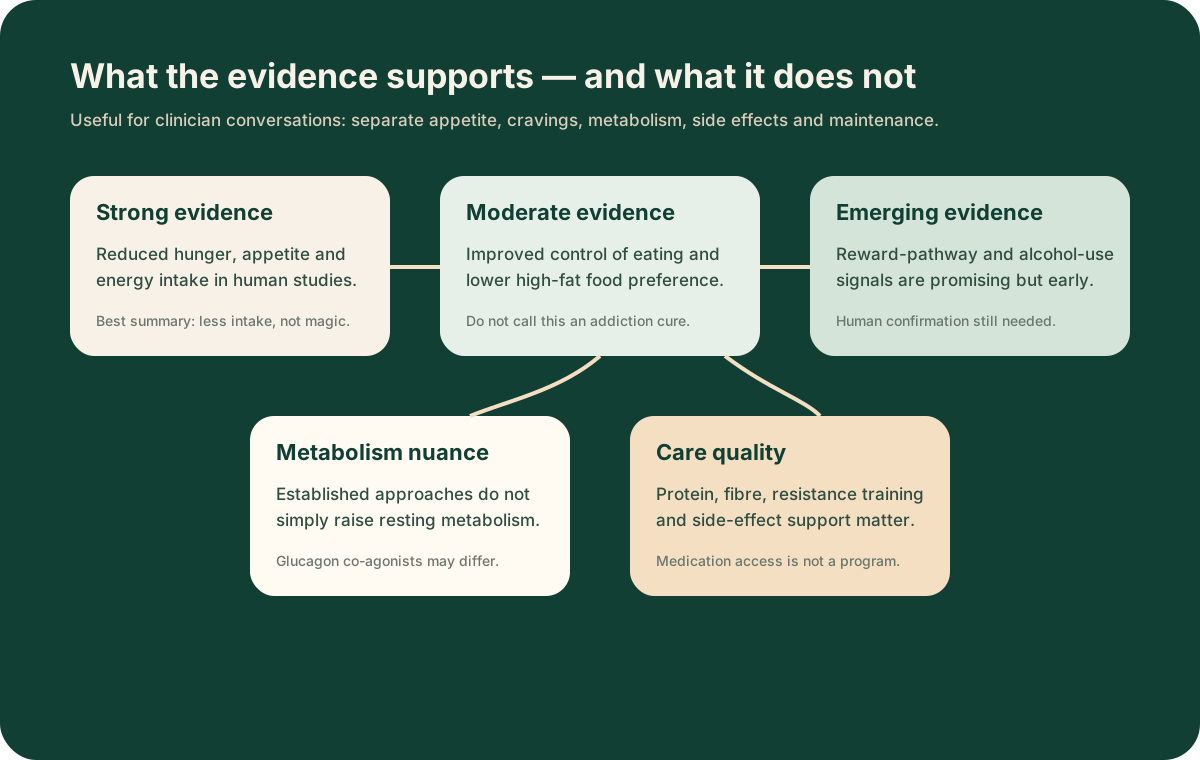
Mechanistic human studies show reduced hunger, cravings, food preference for energy-dense foods and improved control of eating. That supports a biological explanation beyond willpower. It does not support saying these treatments “fix dopamine” or cure addiction.
For metabolic rate, the clean answer is more conservative: established GLP-1 and GIP/GLP-1 approaches should not be described as simply raising resting metabolism. Some investigational multi-receptor approaches with glucagon activity may influence energy expenditure, but that claim needs careful qualification.
Body composition
A useful program protects muscle, protein intake and long-term maintenance.
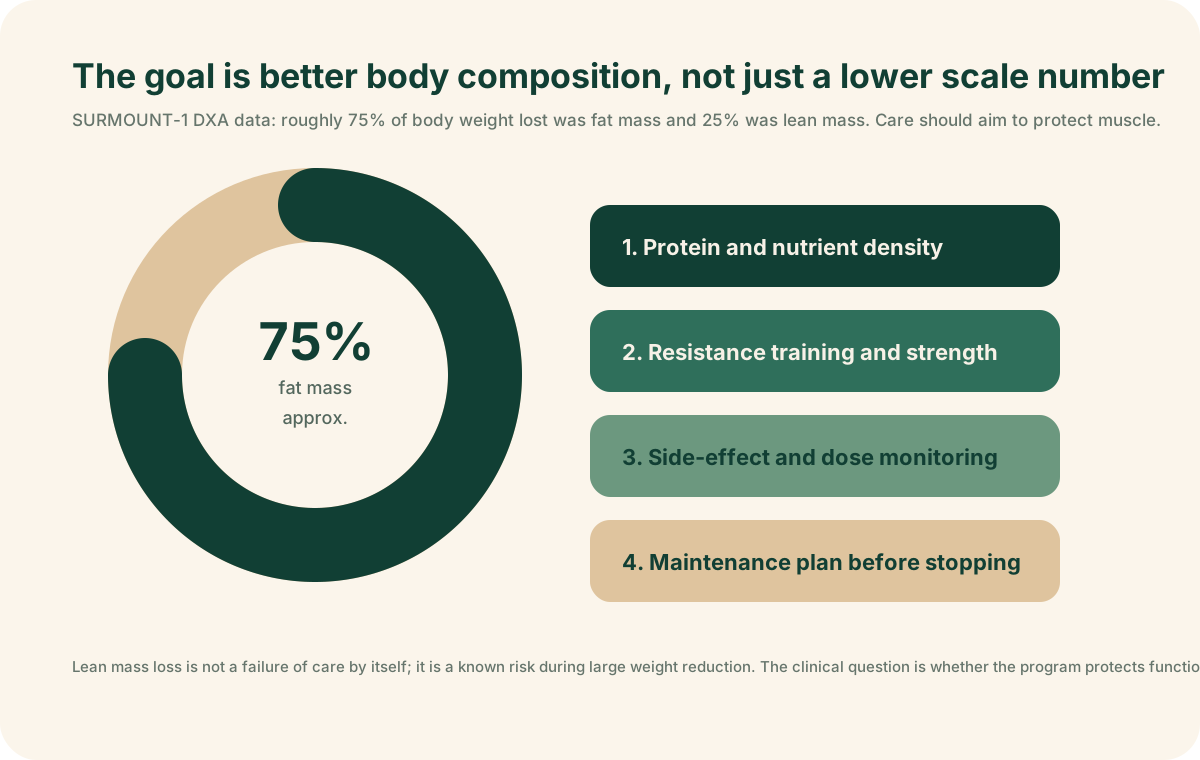
Large weight reduction can include lean-mass loss. SURMOUNT-1 DXA data found that roughly 75% of body weight lost was fat mass and 25% was lean mass. That is why the clinical conversation should include adequate protein, resistance training, side-effect tolerance and a maintenance plan before treatment stops.
Claim grading
What can be said confidently — and what should not be claimed.
Strong
Modern incretin-based therapies reduce appetite, hunger and energy intake in human studies.
Strong
Nausea and GI side effects are common, but weight loss is not explained solely by nausea.
Strong
Stopping therapy commonly leads to regain unless long-term maintenance is planned.
Strong
Large weight reduction includes both fat mass and lean mass; muscle-protective care matters.
Strong
Established GLP-1/GIP approaches should not be described as simply raising resting metabolism.
Moderate
Glucagon-receptor co-agonists may influence energy expenditure, but human evidence is still developing.
Weak / do not claim
These therapies are proven addiction treatments or “fix dopamine”. That is not established.
Practical use
Questions to take into a clinician conversation.
For writers and resource pages
Cite or reuse the charts with attribution.
Suggested citation
Varney Health. “Modern weight-management treatments: Australian statistics and evidence snapshot.” Updated 23 May 2026. https://varney.health/weight-management-statistics-australia
Charts and summaries may be referenced with a link back to this page. Please preserve the caveats that trial results are averages and not personal treatment predictions.
Methodology and sources
Source-backed, updated May 2026.
This page prioritises peer-reviewed trials, public-health agencies, regulator guidance and clearly labelled manufacturer/topline updates where full peer review was not yet available. Trial results are not direct product rankings and do not predict individual outcomes.
Update log
23 May 2026
Initial evidence snapshot published with AIHW context, TGA compliance guidance, STEP/SURMOUNT/SELECT references, body-composition evidence and downloadable chart assets.
Next review
30 June 2026, or earlier if peer-reviewed TRIUMPH-1 data or major Australian regulator guidance changes are published.
FAQ
Common questions, answered carefully.
Are modern weight-management medicines just making people nauseous?
No. Digestive side effects are common and clinically important, but human studies also show reduced appetite, cravings, energy intake and preference for energy-dense foods. Side effects still need active monitoring.
Do these treatments raise metabolic rate?
For established GLP-1 and GIP/GLP-1 approaches, human evidence does not support a simple “metabolism boost” claim. Some investigational multi-receptor approaches may influence energy expenditure, but the evidence is still developing.
Why does behaviour support still matter?
Reduced appetite does not automatically create a high-protein, high-fibre diet or preserve muscle. Care quality means nutrition support, resistance training, symptom management and maintenance planning.
Is this page medical advice?
No. It is general education only. Individual suitability, risks and monitoring need assessment by a registered health practitioner.